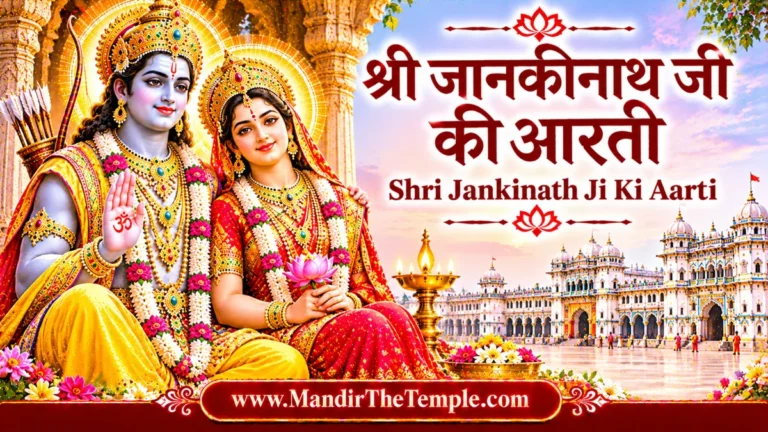
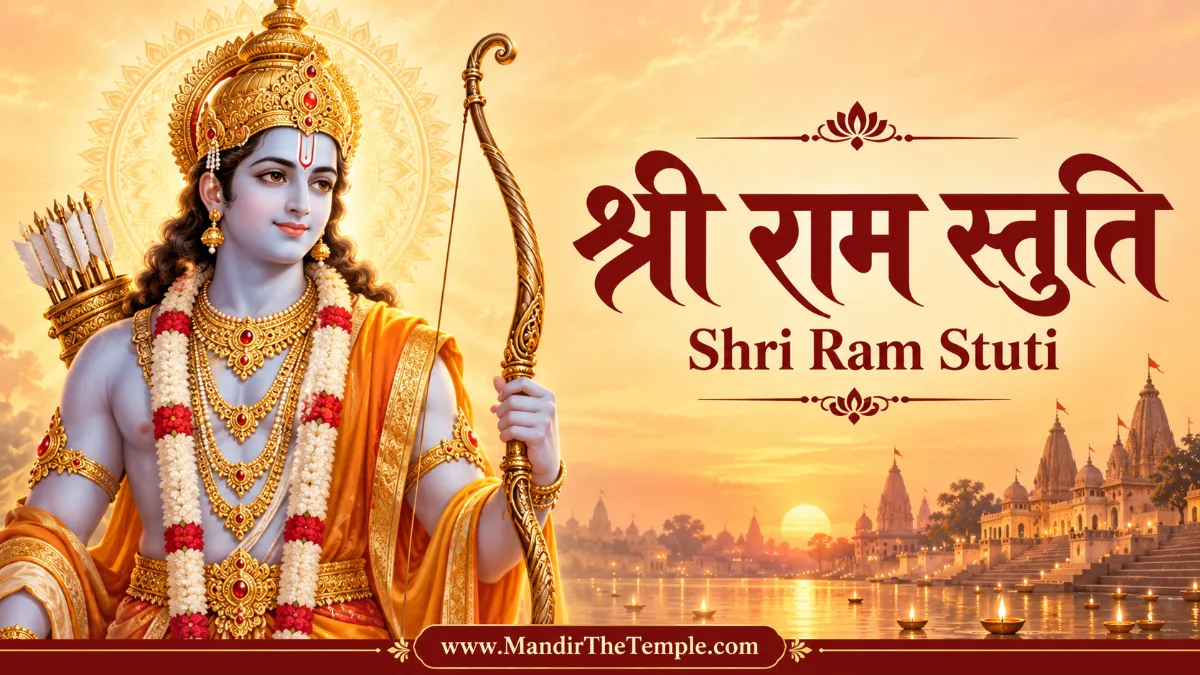
Shri Ram Stuti is one of the best-loved hymns in praise of Lord Rama. It begins with the famous line “Shri Ramchandra kripalu bhaju man, haran bhavbhay darunam” and beautifully describes Rama’s divine form, his compassion, his ideal conduct, his valour and his grace towards devotees.
Lord Rama is called Maryada Purushottam — the ideal among men. His life stands for truth, dharma, sacrifice, love, duty and noble conduct. Reciting the Ram Stuti with faith connects the devotee with the remembrance of Shri Rama. On this page you will find the complete stuti in English and Hindi, its author, the meaning of every verse, its significance, benefits, the method of recitation and answers to common questions.

Shri Ram Stuti lyrics in English
Shri Ramchandra Kripalu Bhaju Man, Haran Bhavbhay Darunam ।
Navkanj Lochan Kanj Mukh, Kar Kanj Pad Kanjarunam ॥ 1 ॥
Kandarp Aganit Amit Chhavi, Navneel Neerad Sundaram ।
Patpeet Manahu Tadit Ruchi Shuchi, Naumi Janaksutavaram ॥ 2 ॥
Bhaju Deenbandhu Dinesh Danav, Daityavansh Nikandanam ।
Raghunand Anandkand, Kaushalchand Dashrathnandanam ॥ 3 ॥
Sir Mukut Kundal Tilak, Charu Udaru Ang Vibhushanam ।
Aajanubhuj Shar Chapdhar, Sangramjit Khardushanam ॥ 4 ॥
Iti Vadati Tulsidas, Shankar Shesh Muni Man Ranjanam ।
Mam Hriday Kanj Nivas Kuru, Kamadi Khaldal Ganjanam ॥ 5 ॥
Manu Jahin Racheu Milihi So Varu, Sahaj Sundar Sanvaro ।
Karuna Nidhan Sujan Seelu, Sanehu Janat Ravaro ॥
Ehi Bhanti Gauri Asis Suni, Siy Sahit Hiyan Harashin Ali ।
Tulsi Bhavanihi Pooji Puni-Puni, Mudit Man Mandir Chali ॥
Shri Ram Stuti PDF Download in English
Download the Shri Ram Stuti PDF with lyrics in English — large, clear text that you can print for your puja or keep on your phone. Free, 2 pages (A4). Shri Ram Stuti lyrics in English PDF for home aarti, temples and family prayer.
2 pages · A4 · Free · For print and mobile
Shri Ram Stuti in Hindi
श्री रामचन्द्र कृपालु भजु मन, हरण भवभय दारुणम्।
नवकंज लोचन कंज मुख, कर कंज पद कंजारुणम्॥ १॥
कन्दर्प अगणित अमित छवि, नवनील नीरद सुन्दरम्।
पटपीत मानहु तड़ित रुचि शुचि, नौमि जनकसुतावरम्॥ २॥
भजु दीनबन्धु दिनेश दानव, दैत्यवंश निकन्दनम्।
रघुनन्द आनन्दकन्द, कौशलचन्द दशरथनन्दनम्॥ ३॥
सिर मुकुट कुंडल तिलक, चारु उदारु अंग विभूषणम्।
आजानुभुज शर चापधर, संग्रामजित खरदूषणम्॥ ४॥
इति वदति तुलसीदास, शंकर शेष मुनि मन रंजनम्।
मम हृदय कंज निवास कुरु, कामादि खलदल गंजनम्॥ ५॥
मनु जाहिं राचेउ मिलिहि सो वरु, सहज सुंदर साँवरो।
करुणा निधान सुजान सीलु, सनेहु जानत रावरो॥
एहि भाँति गौरी असीस सुनि, सिय सहित हियँ हरषीं अली।
तुलसी भवानिहि पूजि पुनि-पुनि, मुदित मन मंदिर चली॥
॥ सियावर रामचन्द्र की जय ॥
॥ पवनसुत हनुमान की जय ॥
॥ जय श्री राम ॥
Meaning of Shri Ram Stuti
1. Shri Ramchandra kripalu bhaju man
O mind, worship the compassionate Shri Ramchandra, who removes the terrible fear of worldly existence. His eyes are like new lotuses, his face is a lotus, and his hands and feet are like red lotuses.
2. Kandarp agnit amit chhavi
His beauty surpasses countless Kamadevas; he is lovely like a fresh dark-blue rain cloud. His yellow garment shines like pure lightning. I bow to him, the husband of Janaki (Sita).
3. Bhaju deenbandhu dinesh
Worship the friend of the humble, the sun among the Raghus, who destroys the race of demons and daityas; the delight of the Raghu dynasty, the source of joy, the moon of Kaushalya and the son of Dasharatha.
4. Sir mukut kundal tilak
He wears a crown on his head, earrings and a tilak, and beautiful ornaments on his graceful body. His arms reach his knees; he holds the bow and arrows and he conquered the demons Khara and Dushana in battle.
5. Iti vadati Tulsidas
So says Tulsidas: O Lord, delight of Shankara, Shesha and the sages, destroyer of the army of desire and other inner enemies — please dwell in the lotus of my heart.
6. Manu jahin racheu milihi so baru
In the Ramcharitmanas Goddess Gauri blesses Sita: “The groom on whom your heart is set — naturally handsome and dark — will be yours. He is an ocean of compassion, all-knowing, and he knows your love.” Hearing the blessing, Sita and her companions rejoice, and Tulsidas says Bhavani’s grace filled her heart with joy.
Where the Ram Stuti comes from: Vinaya Patrika and Ramcharitmanas
Few people realise that what we sing together as the “Shri Ram Stuti” comes from two different works of Goswami Tulsidas:
- Verses 1–5 (from “Shri Ramchandra Kripalu Bhaju Man” to “Kamadi Khaldal Ganjanam”) — from Tulsidas’s Vinaya Patrika, a collection of prayer-songs in Braj Bhasha.
- The closing chhand (“Manu Jahin Racheu Milihi So Varu…” and “Ehi Bhanti Gauri Asis Suni…”) — from the Bal Kand of the Ramcharitmanas, in the Pushpvatika episode, where Mother Sita worships Gauri and Mother Parvati blesses her with the husband she longs for.
- In temple and Ramayana-recitation tradition both parts are sung together — first the description of Shri Ram’s form, then the blessing to Sita that points to her union with Ram.
Textual variations
Different books and websites show small differences in wording. These come from spelling and pronunciation traditions; the meaning stays the same:
| What we print | Other common form | Why |
|---|---|---|
| Darunam, Sundaram, Vibhushanam | Darunan, Sundaran, Vibhushanan (with anusvara) | Ending written with halant “m” or anusvara — both traditions exist |
| Manu jahin racheu milihi so varu | Man jahi rachyo milahi so var | The first is closer to the Awadhi of the Ramcharitmanas; the second is a colloquial form |
| (no sortha) | The sortha “Jani Gauri anukul siy hiy harashu na jai kahi…” as well | Many books add this sortha at the end — it is from the same Ramcharitmanas episode |
Meaning of difficult words
| Word | Meaning |
|---|---|
| Kripalu | merciful |
| Bhavbhay darunam | the terrible fear of worldly existence |
| Navkanj, kanj | freshly bloomed lotus, lotus |
| Kanjarunam | red like a lotus |
| Kandarp | Kamadev, god of love |
| Navneel neerad | a fresh dark-blue cloud |
| Tadit ruchi | the gleam of lightning |
| Naumi | I bow |
| Janaksutavaram | husband of Janak’s daughter (Sita) |
| Dinesh | the sun |
| Nikandanam | destroyer from the root |
| Aajanubhuj | with arms reaching the knees |
| Khardushanam | the demons Khar and Dushan |
| Ganjanam | destroyer |
| Ravaro | yours |
Symbols in Shri Ram’s form
- Lotus four times: eyes, face, hands and feet are all called lotuses — the lotus stays pure though it grows in mud, a symbol of Shri Ram’s purity.
- Colour of a fresh blue cloud: a cloud gives rain to all without distinction — so Ram’s grace falls on everyone.
- Yellow garment and lightning: the yellow pitambar on his dark body shines like lightning in a dark cloud.
- Dinesh and Danav-Nikandan: the glory of the Solar dynasty on one side, the destroyer of adharma on the other.
- “Kamadi khaldal”: in the last verse Tulsidas asks protection not from outer demons but from the enemies within — desire, anger, greed and attachment.
Ram Stuti, Ram Raksha Stotra and Ram Chalisa — the difference
| Work | Author | Language | When read |
|---|---|---|---|
| Shri Ram Stuti (Shri Ramchandra Kripalu) | Goswami Tulsidas | Sanskritised Braj Bhasha / Awadhi | Before aarti, at the end of Ramayana recitation, in daily worship |
| Ram Raksha Stotra | Budhakaushika Rishi (by tradition) | Sanskrit | For protection, especially in Navratri and on Ram Navami |
| Shri Ram Chalisa | Devotee-poet (traditional) | Awadhi-Hindi | Daily worship, Tuesdays and Ram Navami |
Beliefs and facts — common doubts answered
- Belief: the whole stuti comes from one book.
Fact: the first five verses are from the Vinaya Patrika and the closing chhand from the Bal Kand of the Ramcharitmanas — tradition sings them together. - Belief: Ram Stuti is read only on Ram Navami.
Fact: it can be read on any day; it is especially sung on Ram Navami, Dussehra, Diwali and at Ramayana recitations. - Belief: it is a Sanskrit composition.
Fact: it is full of Sanskrit-style words (Darunam, Sundaram), but the language of the Vinaya Patrika is Braj Bhasha and the closing chhand is Awadhi. - Belief: reading without puja items gives no fruit.
Fact: tradition values cleanliness and a lamp, but the stuti itself is remembrance with faith — no scripture says it must not be read without puja items. - Belief: reciting it instantly fulfils every wish.
Fact: that is a devotee’s belief, not a guarantee. The real spirit is in Tulsidas’s own words — freedom from the inner enemies and Shri Ram dwelling in the heart.
Benefits of reciting Shri Ram Stuti
- Peace of mind — the gentle verses calm the mind.
- Courage in fear and worry — it builds patience in difficult times.
- Positive thinking — remembering Rama’s qualities encourages good thoughts.
- Greater devotion and faith.
- Happiness and harmony in the family when it is sung together at home.
- Spiritual progress through regular remembrance of God.
When to recite Shri Ram Stuti
It can be recited every morning and evening. It is especially auspicious on Ram Navami, Vivah Panchami, Diwali, Dussehra, Thursdays and during Ramayana path. Many families sing it after the evening aarti. See upcoming festival dates in our Vrat Calendar.
Simple puja vidhi for Ram Stuti
- Bathe and sit before an image of Sita-Rama, Lakshmana and Hanuman.
- Light a ghee lamp and incense and offer flowers, tulsi leaves and sweets.
- Recite or sing the stuti with a calm mind, then chant “Shri Ram Jai Ram Jai Jai Ram”.
- Finish with an aarti and share the prasad. Many devotees also recite the Ram Chalisa or the Hanuman Chalisa.
The main message of Shri Ram Stuti
The stuti teaches that loving remembrance of Rama’s form and qualities frees the mind from fear and desire. By asking Rama to live in the heart, the devotee aims to bring his compassion, humility and righteousness into everyday life.
Read more about Lord Rama on Wikipedia.
Frequently asked questions
Who wrote Shri Ram Stuti?
Goswami Tulsidas. It is part of his Vinay Patrika; the closing verse is from the Bal Kand of his Ramcharitmanas.
When should Shri Ram Stuti be recited?
Daily, morning or evening, and especially on Ram Navami, Vivah Panchami, Diwali, Dussehra and Thursdays.
Can Shri Ram Stuti be read every day?
Yes. It is short and can be recited every day, ideally after bathing, before an image of Shri Rama.
How many verses does Shri Ram Stuti have?
Usually five verses from Vinay Patrika, often followed by the verse “Manu jahin racheu” and a soratha from the Ramcharitmanas.
Can women recite Shri Ram Stuti?
Yes. Anyone can recite it with devotion.
What are the benefits of Shri Ram Stuti?
Devotees find peace of mind, courage, positive thinking and deeper devotion, and harmony at home.
Are Shri Ram Stuti and Ram Raksha Stotra the same?
No. Ram Stuti is Tulsidas’s hymn “Shri Ramchandra kripalu”; Ram Raksha Stotra is a separate Sanskrit stotra by Budha Kaushika.
What is the most famous line of Shri Ram Stuti?
“Shri Ramchandra kripalu bhaju man, haran bhavbhay darunam.”
Can it be recited without puja items?
Yes. True devotion matters most; it can be sung anywhere with a calm mind.
Which book is Shri Ram Stuti taken from?
The first five verses are from Goswami Tulsidas’s Vinaya Patrika, and the closing chhand “Manu Jahin Racheu…” is from the Bal Kand of the Ramcharitmanas (the Pushpvatika episode).
Is Shri Ram Stuti in Sanskrit?
Not entirely. It is full of Sanskrit-style words, but the language of the Vinaya Patrika is Braj Bhasha and the closing chhand is Awadhi.
How can I download the Shri Ram Stuti PDF?
Tap the “Download PDF (English)” button in the “Shri Ram Stuti PDF Download in English” section on this page — the PDF opens in a new tab and you can save it to your phone or computer. It is free and printable. A Hindi PDF is also available, and all aarti PDFs are together on the Aarti Sangrah PDF page.