
Hanuman Chalisa Lyrics in English, Meaning, Significance, Benefits and Recitation Guide
Table of Contents
The Hanuman Chalisa is one of the most beloved and widely recited devotional hymns dedicated to Lord Hanuman. Traditionally attributed to Goswami Tulsidas, the Hanuman Chalisa praises Lord Hanuman for his extraordinary strength, wisdom, courage, humility, devotion and selfless service to Lord Rama.
The word “Chalisa” is derived from chaalis, the Hindi word for forty, because the main body of the composition contains 40 chaupais.
The Hanuman Chalisa is traditionally associated with the Awadhi devotional tradition. It is recited in temples and homes by devotees in India and around the world.
Many devotees recite it every day or particularly on Tuesdays and Saturdays, Hanuman Jayanti, during religious ceremonies, or whenever they wish to remember Lord Hanuman.
More than a prayer for protection or relief from difficulties, the Hanuman Chalisa is also a powerful expression of the values represented by Hanuman Ji:
Strength without arrogance.
Knowledge with wisdom.
Courage with discipline.
Success with humility.
Devotion with complete surrender.
Hanuman Chalisa at a Glance
Name: Hanuman Chalisa
Deity: Lord Hanuman
Traditionally attributed to: Goswami Tulsidas
Main composition: 40 chaupais
Language tradition: Awadhi
Popular occasions: Tuesday, Saturday, Hanuman Jayanti and daily prayer
Main themes: Strength, wisdom, courage, devotion, service and protection
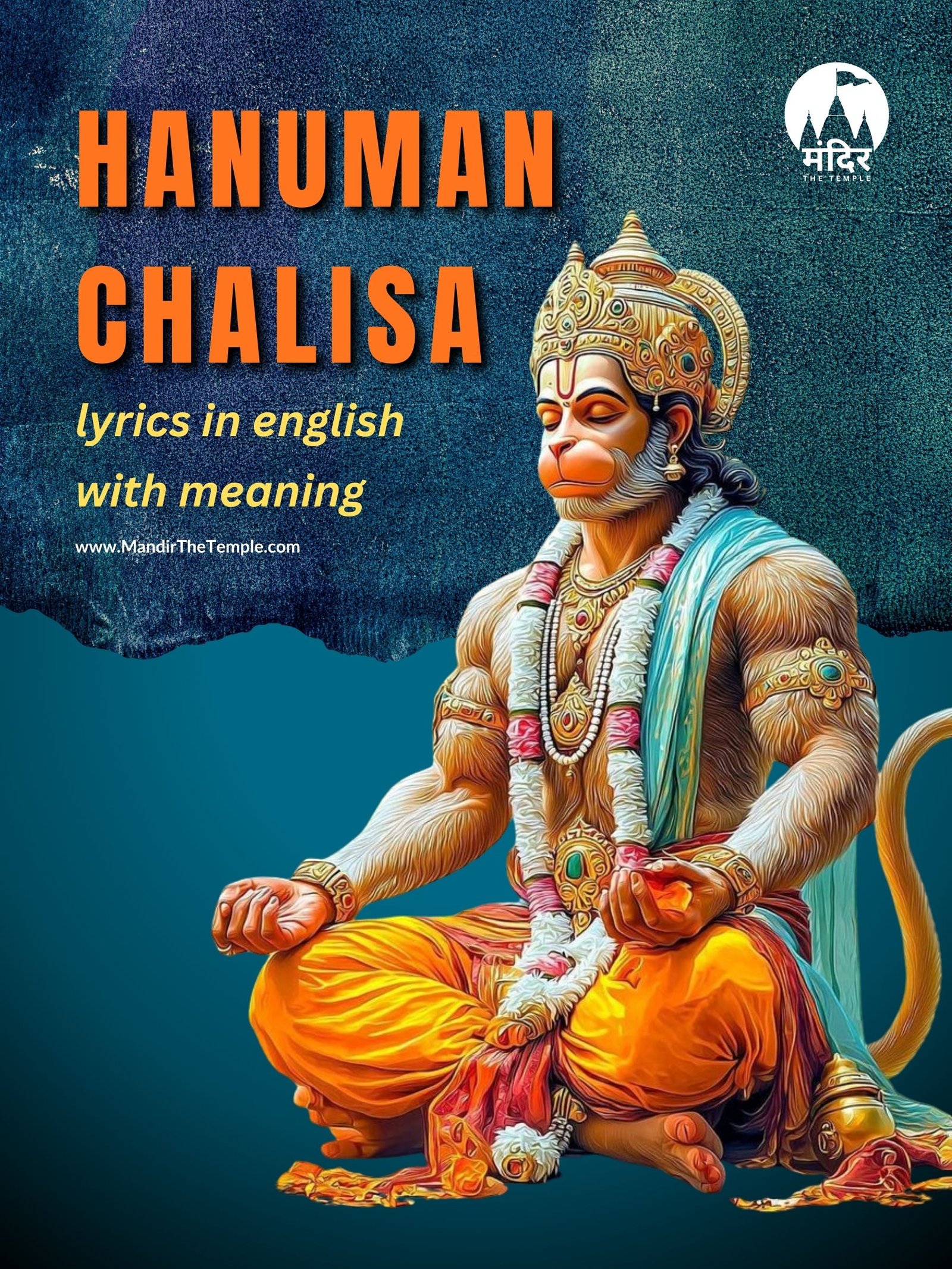
Hanuman Chalisa Lyrics in English
The following is an English transliteration of the traditional Hanuman Chalisa. It allows readers who cannot read Devanagari to pronounce and recite the verses.
Opening Doha
Shri Guru Charan Saroj Raj,
Nij Man Mukur Sudhari.
Barnau Raghubar Bimal Jasu,
Jo Dayaku Phal Chari.
Buddhiheen Tanu Janike,
Sumirau Pavan Kumar.
Bal Buddhi Vidya Dehu Mohi,
Harahu Kalesh Vikar.
Hanuman Chalisa – 40 Chaupais
1. Jai Hanuman Gyan Gun Sagar,
Jai Kapis Tihun Lok Ujagar.
2. Ram Doot Atulit Bal Dhama,
Anjani Putra Pavan Sut Nama.
3. Mahabir Bikram Bajrangi,
Kumati Nivar Sumati Ke Sangi.
4. Kanchan Baran Biraj Subesa,
Kanan Kundal Kunchit Kesa.
5. Hath Vajra Aur Dhwaja Viraje,
Kandhe Moonj Janeu Saje.
6. Shankar Suvan Kesari Nandan,
Tej Pratap Maha Jag Vandan.
7. Vidyavan Guni Ati Chatur,
Ram Kaj Karibe Ko Atur.
8. Prabhu Charitra Sunibe Ko Rasiya,
Ram Lakhan Sita Man Basiya.
9. Sukshma Roop Dhari Siyahi Dikhawa,
Bikat Roop Dhari Lanka Jarawa.
10. Bhim Roop Dhari Asur Sanhare,
Ramchandra Ke Kaj Sanware.
11. Laye Sajivan Lakhan Jiyaye,
Shri Raghubir Harashi Ur Laye.
12. Raghupati Kinhi Bahut Badhai,
Tum Mam Priya Bharat-Hi Sam Bhai.
13. Sahas Badan Tumharo Jas Gavein,
As Kahi Shripati Kanth Lagavein.
14. Sanakadik Brahmadi Munisa,
Narad Sarad Sahit Ahisa.
15. Jam Kuber Digpal Jahan Te,
Kavi Kovid Kahi Sake Kahan Te.
16. Tum Upkar Sugrivahin Kinha,
Ram Milay Raj Pad Dinha.
17. Tumharo Mantra Vibhishan Mana,
Lankeshwar Bhaye Sab Jag Jana.
18. Jug Sahasra Yojan Par Bhanu,
Leelyo Tahi Madhur Phal Janu.
19. Prabhu Mudrika Meli Mukh Mahee,
Jaladhi Langhi Gaye Acharaj Nahee.
20. Durgam Kaj Jagat Ke Jete,
Sugam Anugrah Tumhare Tete.
21. Ram Duware Tum Rakhvare,
Hot Na Agya Binu Paisare.
22. Sab Sukh Lahai Tumhari Sarna,
Tum Rakshak Kahu Ko Darna.
23. Aapan Tej Samharo Aapai,
Teenon Lok Hank Te Kanpai.
24. Bhoot Pishach Nikat Nahi Aavai,
Mahavir Jab Naam Sunavai.
25. Nasai Rog Harai Sab Peera,
Japat Nirantar Hanumat Beera.
26. Sankat Te Hanuman Chhudavai,
Man Kram Vachan Dhyan Jo Lavai.
27. Sab Par Ram Tapasvi Raja,
Tin Ke Kaj Sakal Tum Saja.
28. Aur Manorath Jo Koi Lavai,
Soi Amit Jivan Phal Pavai.
29. Charon Yug Partap Tumhara,
Hai Parsiddh Jagat Ujiyara.
30. Sadhu Sant Ke Tum Rakhvare,
Asur Nikandan Ram Dulare.
31. Ashta Siddhi Nau Nidhi Ke Data,
As Var Dinh Janaki Mata.
32. Ram Rasayan Tumhare Pasa,
Sada Raho Raghupati Ke Dasa.
33. Tumhare Bhajan Ram Ko Pavai,
Janam Janam Ke Dukh Bisravai.
34. Ant Kaal Raghubar Pur Jai,
Jahan Janma Hari Bhakt Kahai.
35. Aur Devta Chitt Na Dharai,
Hanumat Sei Sarva Sukh Karai.
36. Sankat Kate Mite Sab Peera,
Jo Sumirai Hanumat Balbeera.
37. Jai Jai Jai Hanuman Gosain,
Kripa Karahu Gurudev Ki Naain.
38. Jo Sat Bar Path Kar Koi,
Chhutahi Bandi Maha Sukh Hoi.
39. Jo Yah Padhe Hanuman Chalisa,
Hoye Siddhi Sakhi Gaurisa.
40. Tulsidas Sada Hari Chera,
Keejai Nath Hriday Mah Dera.
Closing Doha
Pavan Tanay Sankat Haran,
Mangal Murti Roop.
Ram Lakhan Sita Sahit,
Hriday Basahu Sur Bhoop.
Meaning of the Opening Doha
The first doha begins with a respectful remembrance of the Guru.
The devotee symbolically uses the dust of the Guru’s lotus feet to cleanse the mirror of the mind before describing the pure glory of Lord Rama.
The second part acknowledges human limitations. Tulsidas Ji addresses Hanuman as the son of the Wind and asks him to grant strength, wisdom and knowledge, while removing suffering and negative tendencies.
The opening therefore establishes an important principle of devotional practice:
Before seeking divine knowledge, the mind should be made humble, focused and receptive.
Meaning of All 40 Hanuman Chalisa Chaupais
1. Hanuman as an Ocean of Knowledge and Virtue
Jai Hanuman Gyan Gun Sagar,
Jai Kapis Tihun Lok Ujagar.
Hanuman is praised as an ocean of knowledge and virtues. His glory is celebrated throughout the three worlds.
The verse reminds devotees that Hanuman’s greatness is not based only on physical strength. His wisdom, character and noble qualities are equally important.
2. The Divine Messenger of Lord Rama
Ram Doot Atulit Bal Dhama,
Anjani Putra Pavan Sut Nama.
Hanuman is the messenger of Lord Rama and the embodiment of incomparable strength. He is known as the son of Anjana and Pavan, the Wind deity.
His identity is therefore connected not only with strength but also with service to Lord Rama.
3. The Great Hero Who Brings Good Sense
Mahabir Bikram Bajrangi,
Kumati Nivar Sumati Ke Sangi.
Hanuman is described as a great warrior of immense strength.
At the same time, he removes wrong thinking and is associated with good judgment and wisdom.
This teaches that physical power becomes truly valuable when it is guided by good sense and righteous thinking.
4. The Radiant Form of Hanuman
Kanchan Baran Biraj Subesa,
Kanan Kundal Kunchit Kesa.
This verse describes Hanuman’s radiant golden complexion, beautiful appearance, earrings and curly hair.
It invites the devotee to visualize the divine form of Hanuman during prayer.
5. The Bearer of the Vajra and Flag
Hath Vajra Aur Dhwaja Viraje,
Kandhe Moonj Janeu Saje.
Hanuman is described as carrying the vajra and a flag, while wearing the sacred thread across his shoulder.
The vajra represents strength and firmness, while the flag can be understood as a symbol of victory and commitment to a righteous purpose.
6. The Son of Kesari and Divine Aspect of Shiva
Shankar Suvan Kesari Nandan,
Tej Pratap Maha Jag Vandan.
Hanuman is traditionally described as an aspect or son of Shankar and as the son of Kesari.
His radiance and glory are revered throughout the world.
The verse emphasizes his divine nature and extraordinary spiritual power.
7. Wise, Virtuous and Intelligent
Vidyavan Guni Ati Chatur,
Ram Kaj Karibe Ko Atur.
Hanuman is learned, virtuous and highly intelligent. He is always eager to perform the work of Lord Rama.
This is one of the central teachings of the Chalisa:
Knowledge and intelligence reach their highest value when they are used in service of a noble purpose.
8. Devoted to the Story of Lord Rama
Prabhu Charitra Sunibe Ko Rasiya,
Ram Lakhan Sita Man Basiya.
Hanuman takes great joy in hearing the story and deeds of Lord Rama.
Lord Rama, Lakshmana and Sita reside in his heart.
This verse expresses the depth of Hanuman’s devotion and shows that his heart is completely dedicated to Lord Rama and His family.
9. Using Different Forms According to the Situation
Sukshma Roop Dhari Siyahi Dikhawa,
Bikat Roop Dhari Lanka Jarawa.
Hanuman assumes a small and subtle form when appearing before Sita in Lanka.
Later, he assumes a formidable form while burning Lanka.
The deeper message is that true strength includes the ability to adapt to circumstances.
Humility is appropriate when humility is needed, while courage and power are necessary when confronting injustice.
10. Destroyer of Evil and Servant of Rama
Bhim Roop Dhari Asur Sanhare,
Ramchandra Ke Kaj Sanware.
Hanuman takes a powerful form to defeat evil forces and accomplish the work entrusted to him by Lord Rama.
The verse celebrates courage, determination and dedication to a righteous cause.
11. Bringing the Life-Saving Herb for Lakshmana
Laye Sajivan Lakhan Jiyaye,
Shri Raghubir Harashi Ur Laye.
According to the traditional Ramayana narrative, Hanuman brings the life-saving herb needed for Lakshmana.
When his mission is successful, Lord Rama embraces him with great affection.
The episode represents dedication, urgency, courage and willingness to do whatever is necessary to fulfill one’s duty.
12. Dear to Lord Rama
Raghupati Kinhi Bahut Badhai,
Tum Mam Priya Bharat-Hi Sam Bhai.
Lord Rama praises Hanuman and tells him that he is as dear to Him as His brother Bharat.
The verse emphasizes the extraordinary value of sincere service and selfless devotion.
13. The Glory of Hanuman Is Boundless
Sahas Badan Tumharo Jas Gavein,
As Kahi Shripati Kanth Lagavein.
The verse expresses the idea that countless voices would be needed to describe Hanuman’s glory.
Lord Rama, known here as Shripati, embraces Hanuman with affection.
The emphasis is on the immeasurable value of Hanuman’s devotion and service.
14. Revered by Divine Sages
Sanakadik Brahmadi Munisa,
Narad Sarad Sahit Ahisa.
The verse invokes Sanaka and other sages, Brahma, Narada, Saraswati and Shesha while describing the praise of Hanuman.
It presents Hanuman’s spiritual stature as worthy of admiration by great sages and divine beings.
15. His Glory Cannot Be Fully Described
Jam Kuber Digpal Jahan Te,
Kavi Kovid Kahi Sake Kahan Te.
Even great divine beings, guardians of the directions and learned poets cannot completely describe Hanuman’s greatness.
The devotional meaning is that divine qualities are so vast that ordinary language cannot fully contain them.
16. Helping Sugriva
Tum Upkar Sugrivahin Kinha,
Ram Milay Raj Pad Dinha.
Hanuman helped Sugriva meet Lord Rama. Through this connection, Sugriva eventually regained his kingdom.
This verse highlights Hanuman’s role as a trustworthy helper, guide and intermediary.
17. Guiding Vibhishana
Tumharo Mantra Vibhishan Mana,
Lankeshwar Bhaye Sab Jag Jana.
Vibhishana accepted Hanuman’s guidance and ultimately joined Lord Rama’s side.
After the victory, he became the ruler of Lanka.
The verse emphasizes the importance of choosing the path of righteousness even when doing so requires leaving one’s familiar surroundings.
18. The Childhood Story of the Sun
Jug Sahasra Yojan Par Bhanu,
Leelyo Tahi Madhur Phal Janu.
This verse recalls the famous traditional story of young Hanuman seeing the Sun and leaping toward it, thinking of it as a fruit.
It represents his extraordinary energy, courage and supernatural abilities.
19. Crossing the Ocean
Prabhu Mudrika Meli Mukh Mahee,
Jaladhi Langhi Gaye Acharaj Nahee.
Carrying Lord Rama’s ring, Hanuman crosses the ocean to reach Lanka.
The verse celebrates his extraordinary determination and faith.
The ocean can also be understood symbolically as an enormous obstacle overcome through purpose, courage and devotion.
20. Difficult Tasks Become Easier
Durgam Kaj Jagat Ke Jete,
Sugam Anugrah Tumhare Tete.
The verse expresses the devotional belief that difficult tasks can become easier through Hanuman’s grace.
It gives devotees a sense of hope and courage when facing challenges.
21. Guardian of Lord Rama’s Door
Ram Duware Tum Rakhvare,
Hot Na Agya Binu Paisare.
Hanuman is described as the guardian of Lord Rama’s door.
In a devotional interpretation, this can also represent Hanuman as a guide toward the path of devotion and surrender to Lord Rama.
22. Seeking Refuge in Hanuman
Sab Sukh Lahai Tumhari Sarna,
Tum Rakshak Kahu Ko Darna.
The devotee seeks refuge in Hanuman and expresses confidence in His protection.
The word “sukh” can be understood not only as material happiness but also as inner reassurance, spiritual comfort and freedom from fear.
23. Mastery Over His Own Power
Aapan Tej Samharo Aapai,
Teenon Lok Hank Te Kanpai.
Hanuman possesses immense power but knows how to control and contain it.
This is an important lesson: true strength is not merely the ability to act powerfully; it is also the ability to control one’s power and use it appropriately.
24. Protection From Fear and Negative Forces
Bhoot Pishach Nikat Nahi Aavai,
Mahavir Jab Naam Sunavai.
In traditional devotional belief, remembering Hanuman is associated with protection from fear and negative forces.
The verse presents Hanuman as a powerful protector whose name inspires courage.
25. A Devotional Prayer for Relief From Pain
Nasai Rog Harai Sab Peera,
Japat Nirantar Hanumat Beera.
This verse expresses the devotional belief that remembering Hanuman can bring relief from illness and suffering.
It should be understood as a religious prayer and expression of faith. Hanuman Chalisa should not be considered a substitute for professional medical diagnosis or treatment.
26. Hanuman as the Remover of Difficulties
Sankat Te Hanuman Chhudavai,
Man Kram Vachan Dhyan Jo Lavai.
The verse expresses the belief that Hanuman helps devotees overcome difficulties when they remember Him with their mind, actions and words.
The deeper message is one of faith, discipline and mental strength during difficult situations.
27. Dedicated to the Work of Lord Rama
Sab Par Ram Tapasvi Raja,
Tin Ke Kaj Sakal Tum Saja.
Lord Rama is praised as the noble and disciplined king, while Hanuman is praised for completing His important tasks.
The verse emphasizes Hanuman’s loyalty, duty and selfless service.
28. Fulfillment of Devotional Aspirations
Aur Manorath Jo Koi Lavai,
Soi Amit Jivan Phal Pavai.
The verse expresses the devotional belief that sincere prayers and aspirations offered through devotion to Hanuman can bear meaningful fruit.
This should be understood within the context of religious faith rather than as a guaranteed promise of a particular worldly outcome.
29. Hanuman’s Glory Through the Ages
Charon Yug Partap Tumhara,
Hai Parsiddh Jagat Ujiyara.
Hanuman’s glory is described as extending across all four ages.
The verse celebrates the enduring nature of Hanuman’s devotion and reputation.
His character continues to inspire devotees across generations.
30. Protector of Saints and Destroyer of Evil
Sadhu Sant Ke Tum Rakhvare,
Asur Nikandan Ram Dulare.
Hanuman is described as a protector of saints and righteous people and a destroyer of evil forces.
He is also described as beloved of Lord Rama.
The verse represents the victory of righteousness over destructive forces.
31. Giver of Eight Siddhis and Nine Nidhis
Ashta Siddhi Nau Nidhi Ke Data,
As Var Dinh Janaki Mata.
This verse refers to the traditional belief that Mother Sita granted Hanuman the blessing of being able to bestow the eight siddhis and nine forms of spiritual or material abundance.
The verse highlights Hanuman’s extraordinary divine status.
32. The Essence of Devotion to Rama
Ram Rasayan Tumhare Pasa,
Sada Raho Raghupati Ke Dasa.
Hanuman possesses the “Ram Rasayan,” symbolically representing the spiritual essence of devotion to Lord Rama.
He remains forever the servant of Lord Rama.
This is one of the central ideas of the Hanuman Chalisa:
Greatness is found not merely in power, but in selfless service.
33. Hanuman Bhakti Leads Toward Rama Bhakti
Tumhare Bhajan Ram Ko Pavai,
Janam Janam Ke Dukh Bisravai.
The verse expresses the devotional belief that worship of Hanuman leads the devotee toward Lord Rama.
Hanuman’s own identity is inseparable from his devotion to Rama.
Therefore, Hanuman worship is also deeply connected with the path of Rama Bhakti.
34. Seeking the Abode of Lord Rama
Ant Kaal Raghubar Pur Jai,
Jahan Janma Hari Bhakt Kahai.
This verse expresses the devotee’s spiritual aspiration to reach the abode of Lord Rama at the end of life and remain connected with devotion.
It reflects the traditional Hindu ideal of remembering and surrendering to the Divine.
35. Single-Minded Devotion
Aur Devta Chitt Na Dharai,
Hanumat Sei Sarva Sukh Karai.
This verse emphasizes single-minded devotion to Hanuman.
It expresses the belief that sincere service and remembrance of Hanuman can bring spiritual happiness and fulfillment.
Different Hindu traditions may express devotion to different forms of the Divine, and this verse should be understood within its devotional context.
36. Remembering Hanuman in Times of Difficulty
Sankat Kate Mite Sab Peera,
Jo Sumirai Hanumat Balbeera.
Remembering Hanuman is associated with relief from difficulties and suffering.
This verse explains why devotees often turn to Hanuman Chalisa during challenging periods of life.
Prayer can provide faith, emotional strength, hope and a sense of spiritual support.
37. Prayer for Hanuman’s Grace
Jai Jai Jai Hanuman Gosain,
Kripa Karahu Gurudev Ki Naain.
The devotee repeatedly praises Hanuman and asks Him to show grace like a revered spiritual teacher or Guru.
The verse expresses humility, surrender and trust.
38. The Traditional Reference to Repeated Recitation
Jo Sat Bar Path Kar Koi,
Chhutahi Bandi Maha Sukh Hoi.
This verse mentions reciting the Hanuman Chalisa one hundred times and associates such devotion with freedom from bondage and the experience of great happiness.
It should be understood as part of the devotional tradition of the Chalisa. A particular number of repetitions does not need to be treated as a universal requirement for every devotee.
39. The Spiritual Fruit of Reading the Chalisa
Jo Yah Padhe Hanuman Chalisa,
Hoye Siddhi Sakhi Gaurisa.
This verse expresses the devotional belief that one who reads the Hanuman Chalisa with devotion may attain spiritual accomplishment.
Gaurisa refers to Lord Shiva, invoked here as a witness to this devotional assurance.
40. A Prayer for Hanuman to Remain in the Heart
Tulsidas Sada Hari Chera,
Keejai Nath Hriday Mah Dera.
In the final chaupai, Tulsidas describes himself as a servant of the Divine and asks Hanuman to make His dwelling in his heart.
This is a deeply humble ending.
After describing Hanuman’s immense strength, courage and achievements, the Chalisa ultimately returns to devotion, humility and surrender.
Meaning of the Closing Doha
Pavan Tanay Sankat Haran,
Mangal Murti Roop.
Ram Lakhan Sita Sahit,
Hriday Basahu Sur Bhoop.
The closing doha addresses Hanuman as the son of the Wind and the remover of difficulties.
He is described as an auspicious and divine form.
The devotee then makes a heartfelt prayer that Hanuman should remain in the heart along with Lord Rama, Lakshmana and Sita.
It is a beautiful conclusion because the entire Hanuman Chalisa ultimately leads back to the devotee’s desire for divine presence within the heart.
Who Is Lord Hanuman?
Lord Hanuman is one of the most revered figures in Hindu devotional tradition.
He is especially known for his unwavering devotion to Lord Rama.
Hanuman is traditionally described as the son of Anjana and associated with Pavan, the Wind deity. He is also known as Kesari Nandan, Pavan Putra, Bajrangbali, Mahavir and Sankatmochan.
His character combines qualities that are often considered opposites:
- immense strength and deep humility
- extraordinary intelligence and simplicity
- tremendous courage and complete discipline
- supernatural abilities and selfless service
- great power and complete devotion
This combination is one reason Hanuman remains such a powerful spiritual and cultural symbol.
Why Is Hanuman Chalisa So Popular?
The popularity of Hanuman Chalisa comes from several factors.
It is rhythmic and relatively easy to memorize.
Its verses connect directly with important stories from the Ramayana.
It presents Hanuman as a figure of courage and protection.
It gives devotees an opportunity to express their devotion to Lord Hanuman and Lord Rama.
It also contains values that remain relevant in everyday life—discipline, courage, intelligence, humility and service.
For many people, reciting the Chalisa is both a religious practice and a way of creating a quiet moment of reflection.
The Spiritual Significance of Hanuman Chalisa
The Hanuman Chalisa can be understood at several levels.
At the devotional level, it is a prayer to Lord Hanuman.
At the philosophical level, it describes the transformation of strength into service.
At the personal level, it reminds the reader to cultivate courage, wisdom and humility.
At the spiritual level, it points toward surrender and devotion.
The most powerful lesson may be that strength becomes meaningful when it is guided by wisdom and dedicated to a higher purpose.
The Five Major Qualities of Hanuman
1. Strength
Hanuman represents extraordinary physical and spiritual strength.
But his strength is never presented as a reason for pride.
2. Wisdom
Hanuman repeatedly makes intelligent decisions throughout the Ramayana.
His strength is guided by understanding.
3. Courage
Whether crossing the ocean or entering Lanka, Hanuman does not allow difficult circumstances to defeat his purpose.
4. Humility
Despite his extraordinary achievements, Hanuman remains a servant of Lord Rama.
5. Devotion
His deepest identity is that of a devoted servant of Rama.
These five qualities make Hanuman an enduring example of ideal character.
Why Do Devotees Recite Hanuman Chalisa?
Devotees recite Hanuman Chalisa for many spiritual reasons.
Some recite it as part of their daily prayer.
Some seek courage during difficult circumstances.
Some recite it as an expression of devotion to Hanuman and Lord Rama.
Others find that regular recitation creates a sense of discipline, concentration and spiritual peace.
Common devotional intentions include:
- remembering Lord Hanuman
- seeking courage
- praying for protection
- cultivating positive thoughts
- developing discipline
- seeking spiritual strength
- expressing devotion to Lord Rama
- remembering the values represented by Hanuman
These should be understood as spiritual and devotional purposes rather than guaranteed worldly outcomes.
Benefits of Hanuman Chalisa
According to traditional devotional belief, regular recitation of Hanuman Chalisa is associated with several spiritual benefits.
Mental Peace
A regular prayer routine can provide a quiet period away from everyday distractions and help create a sense of calm and reflection.
Courage and Confidence
Remembering Hanuman’s fearless character can inspire devotees to face difficult situations with greater courage.
Positive Thinking
The Chalisa repeatedly celebrates wisdom, strength, service, devotion and good judgment.
Reflecting on these qualities can encourage a more constructive mindset.
Spiritual Discipline
Daily recitation can become a consistent spiritual practice.
Emotional Support During Difficult Times
Many people turn to prayer during periods of uncertainty, grief or stress. Devotional practice can provide hope, faith and a sense of emotional support.
Greater Focus
Reciting a familiar devotional text with attention can create a period of concentration and mindfulness.
These are best understood as spiritual or devotional benefits. Hanuman Chalisa should not replace professional medical or mental-health care when such care is needed.
When Should You Recite Hanuman Chalisa?
There is no single mandatory time for reciting Hanuman Chalisa.
Devotees may read it according to their personal practice and tradition.
Popular times include:
- early morning
- after bathing and completing daily worship
- evening prayer
- Tuesday
- Saturday
- Hanuman Jayanti
- during religious ceremonies
- during personal prayer
- before meditation
- during difficult periods when one seeks spiritual comfort
The most important aspect is sincere devotion rather than a particular clock time.
Hanuman Chalisa on Tuesday
Tuesday is traditionally associated with Lord Hanuman worship.
Many devotees visit Hanuman temples on Tuesday and offer prayers, flowers, sindoor according to local tradition, and light a diya.
A simple home prayer may include:
- Clean the prayer space.
- Light a diya.
- Remember Lord Rama and Hanuman Ji.
- Chant Om Hanumate Namah.
- Recite Hanuman Chalisa.
- Offer a short prayer for the well-being of family and everyone.
There is no need for an elaborate ritual if one is simply seeking a devotional moment.
Hanuman Chalisa on Saturday
Saturday is another popular day for Hanuman worship.
In popular Hindu devotional traditions, worship of Hanuman is often associated with protection from fear and difficulties connected with Shani.
Many devotees therefore recite Hanuman Chalisa on Saturday.
Practices can differ between families, temples and regional traditions, so devotees may follow the customs they are familiar with.
How to Recite Hanuman Chalisa
A simple and peaceful method can be followed.
Step 1: Maintain Cleanliness
If convenient, take a bath and wear clean clothes before prayer.
Step 2: Prepare the Prayer Space
Sit in a clean and quiet place. A picture or idol of Hanuman Ji may be placed before you.
Step 3: Light a Diya
A diya may be lit as part of the prayer.
Step 4: Remember Lord Rama
Since Hanuman’s devotion is centered on Lord Rama, devotees may begin by remembering Rama, Sita and Lakshmana.
Step 5: Chant a Simple Mantra
You may chant:
Om Hanumate Namah
a few times.
Step 6: Recite Hanuman Chalisa
Read the complete Chalisa slowly and attentively.
Try to understand the meaning rather than simply rushing through the words.
Step 7: Offer a Prayer
Conclude by praying for peace, wisdom, courage and the well-being of all.
Can Hanuman Chalisa Be Read Every Day?
Yes.
There is no requirement that Hanuman Chalisa must only be read on Tuesday or Saturday.
Devotees may include it in their daily spiritual routine.
Some people prefer morning recitation, while others find evening or night more convenient.
Consistency, attention and devotion are more important than following a rigid schedule.
How Many Times Should Hanuman Chalisa Be Recited?
There is no single number that applies to everyone.
Many devotees read it once a day.
Some read it three, seven, eleven or more times on special occasions.
Some follow a particular devotional discipline or spiritual vow.
The Chalisa itself contains a traditional reference to one hundred recitations, but this should not be interpreted as a compulsory number for every person.
The spirit of devotion is more important than mechanically counting repetitions.
Can Hanuman Chalisa Be Read at Night?
Yes.
Hanuman Chalisa can be recited in the evening or at night.
Many devotees read it before going to sleep, especially when they want to end the day with prayer and remembrance of Hanuman Ji.
A quiet environment can make the experience more peaceful and reflective.
Can Women Recite Hanuman Chalisa?
Yes. Women also regularly recite Hanuman Chalisa as part of their devotional practice.
Specific customs related to worship can vary between families, communities and traditions.
Devotees may follow the practices taught in their own family or spiritual tradition.
Can Children Read Hanuman Chalisa?
Yes.
Hanuman Chalisa can be introduced to children gradually.
More important than simply memorizing the verses is helping children understand the values represented by Hanuman:
- courage
- knowledge
- discipline
- humility
- respect
- service
- devotion
- determination
Children who understand these values can connect with the deeper meaning of the Chalisa rather than treating it only as something to memorize.
Hanuman Chalisa and Lord Rama
The relationship between Hanuman and Lord Rama is at the heart of the Hanuman Chalisa.
Hanuman’s extraordinary abilities become meaningful because he uses them in the service of Lord Rama.
He does not seek personal glory.
He does not use his strength for selfish purposes.
He repeatedly places himself at the service of his Lord.
This is why Hanuman is often remembered as the perfect example of selfless devotion.
His story teaches that the greatest form of strength is not domination over others, but mastery over oneself and dedication to a noble purpose.
Hanuman Chalisa and the Ramayana
Many verses of the Hanuman Chalisa refer to important events associated with Hanuman in the Ramayana tradition.
These include:
- Hanuman’s meeting with Lord Rama
- his relationship with Sugriva
- his journey to Lanka
- his meeting with Sita
- his burning of Lanka
- his battle with demons
- his assistance to Lakshmana
- his role in the victory of Lord Rama
- Vibhishana’s acceptance of Rama’s side
Therefore, reading the Hanuman Chalisa can also encourage devotees to explore the larger story and teachings of the Ramayana.
The Deeper Life Lessons of Hanuman Chalisa
The Hanuman Chalisa contains lessons that can be applied beyond religious practice.
Strength Without Ego
Hanuman has immense strength but remains humble.
Intelligence With Action
Hanuman does not merely know what should be done—he acts decisively.
Adaptability
He can become subtle when required and powerful when necessary.
Loyalty
His dedication to Lord Rama never wavers.
Service
He uses his abilities for the benefit of others and for a higher purpose.
Courage
He does not allow the size of an obstacle to destroy his determination.
Faith
His devotion gives him the confidence to undertake extraordinary tasks.
These qualities make Hanuman a powerful symbol of ideal character.
Hanuman Chalisa for Inner Strength
Many devotees turn to Hanuman Chalisa during stressful or uncertain periods.
The repeated remembrance of Hanuman can become a form of spiritual grounding.
The stories represented in the verses remind the devotee that difficulties do not necessarily mean that the journey has ended.
Hanuman repeatedly faces challenges that appear impossible and finds a way forward through courage, intelligence and devotion.
For this reason, the Chalisa can be meaningful not only as a prayer but also as a source of inspiration.
Frequently Asked Questions About Hanuman Chalisa
What is Hanuman Chalisa?
Hanuman Chalisa is a devotional hymn dedicated to Lord Hanuman. Its main body contains forty chaupais and it is traditionally attributed to Goswami Tulsidas.
Who wrote Hanuman Chalisa?
The Hanuman Chalisa is traditionally attributed to Goswami Tulsidas, the renowned saint-poet associated with the Ramcharitmanas tradition.
Why is it called Hanuman Chalisa?
It is called “Chalisa” because the main composition contains forty chaupais. Chaalis means forty in Hindi.
In which language was Hanuman Chalisa written?
The Hanuman Chalisa is traditionally associated with the Awadhi language and devotional literary tradition.
What is Hanuman Chalisa in English?
“Hanuman Chalisa in English” generally refers to an English transliteration of the original verses, allowing people who cannot read Devanagari to pronounce the Chalisa.
It can also refer to an English translation or explanation of its meaning.
What are Hanuman Chalisa lyrics?
Hanuman Chalisa lyrics are the complete devotional verses beginning with “Jai Hanuman Gyan Gun Sagar” and containing forty principal chaupais, along with opening and closing dohas.
What is the main message of Hanuman Chalisa?
Its central themes are devotion, courage, wisdom, humility, selfless service and faith in Lord Rama.
Can Hanuman Chalisa be read daily?
Yes. Devotees can read it every day according to their personal spiritual practice.
Is Tuesday special for Hanuman Chalisa?
Tuesday is traditionally associated with Hanuman worship, and many devotees recite Hanuman Chalisa on this day.
Can Hanuman Chalisa be read on Saturday?
Yes. Saturday is also a popular day for Hanuman worship and many devotees recite the Chalisa on Saturdays.
Can Hanuman Chalisa be read at night?
Yes. Devotees may recite it in the evening or at night according to their routine and tradition.
Can women read Hanuman Chalisa?
Yes. Women regularly recite Hanuman Chalisa as part of their devotional practice.
Can children learn Hanuman Chalisa?
Yes. Children can learn it gradually, especially when they are also taught the meaning and values behind the verses.
How many times should Hanuman Chalisa be read?
There is no universal number that applies to everyone. Many devotees read it once daily, while others follow their own devotional routine.
Is Hanuman Chalisa a mantra?
Hanuman Chalisa is more accurately described as a devotional hymn or stotra rather than a single mantra. It contains praise and prayers dedicated to Lord Hanuman.
What is the relationship between Hanuman and Lord Rama?
Hanuman is one of Lord Rama’s greatest devotees. His life and actions in the Ramayana are deeply connected with serving Rama.
Does Hanuman Chalisa provide medical treatment?
No. The Chalisa is a devotional prayer. While devotees may find spiritual comfort and hope through prayer, medical conditions should be evaluated and treated by qualified healthcare professionals.
What should I do before reciting Hanuman Chalisa?
A simple approach is to sit in a clean and peaceful place, remember Lord Rama and Hanuman Ji, light a diya if appropriate, and begin the recitation with devotion.
Hanuman Chalisa – The Essence in Simple Words
If the entire Hanuman Chalisa is summarized in a few ideas, its message can be understood as:
Be strong, but do not become arrogant.
Be knowledgeable, but remain wise.
Be courageous, but remain disciplined.
Be successful, but remain humble.
Use your abilities to serve a higher purpose.
Remain devoted to what is righteous.
This is the timeless inspiration found in the character of Lord Hanuman.
Conclusion
The Hanuman Chalisa is much more than a collection of forty devotional verses.
It is a celebration of Lord Hanuman’s extraordinary strength, wisdom, courage, humility and devotion to Lord Rama.
For devotees, reciting the Chalisa can become a meaningful spiritual practice. It can provide a quiet moment for prayer, reflection and remembrance.
The life of Hanuman teaches us that strength is most valuable when it is guided by wisdom.
Knowledge becomes meaningful when it is used for a good purpose.
Success becomes meaningful when it is accompanied by humility.
And devotion becomes powerful when it is expressed through selfless service.
The final prayer of the Hanuman Chalisa beautifully brings everything back to the heart:
“Pavan Tanay Sankat Haran,
Mangal Murti Roop.
Ram Lakhan Sita Sahit,
Hriday Basahu Sur Bhoop.”
May the remembrance of Hanuman inspire courage in difficult times, wisdom in important decisions, humility in success and devotion in everyday life.
Jai Shri Ram.
Jai Hanuman.
Jai Bajrang Bali. 🙏🚩
Also Read Bajrang Baan
Also Read Vinay Chalisa
Follow on Instagram Mandir The Temple
Also See at Youtube : Mandir The Temple
Kainchi Dham Guide 2026: History, Timings, How to Reach & Visit Tips
Related posts:
 हनुमान चालीसा (Hanuman Chalisa): हिंदी में संपूर्ण पाठ, सरल अर्थ, महत्व, लाभ और पाठ विधि
 Shri Ram Chalisa – श्री राम चालीसा
 Hanuman Bajrang Baan Lyrics in Hindi & English with Meaning
 Vinay Chalisa – Neem Karoli Baba विनय चालीसा – नीम करोली बाबा
 गणेश चालीसा Ganesh Chalisa Lyrics in Hindi, सरल अर्थ, महत्व, लाभ और पाठ विधि
 Shri Durga Chalisa – श्री दुर्गा चालीसा