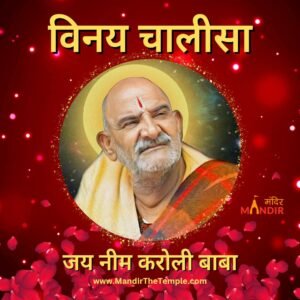
Neem Karoli Baba: Life Story, Miracles, Teachings and Legacy of Maharaj Ji
Last updated: October 2026
Table of Contents
Neem Karoli Baba, lovingly known as Maharaj Ji, was one of India’s most beloved spiritual saints. A great devotee of Lord Hanuman, he is remembered for his unconditional love, compassion, humility, miraculous stories and simple yet powerful teachings.
His message was beautifully simple: Love everyone, feed everyone, remember God and tell the truth.
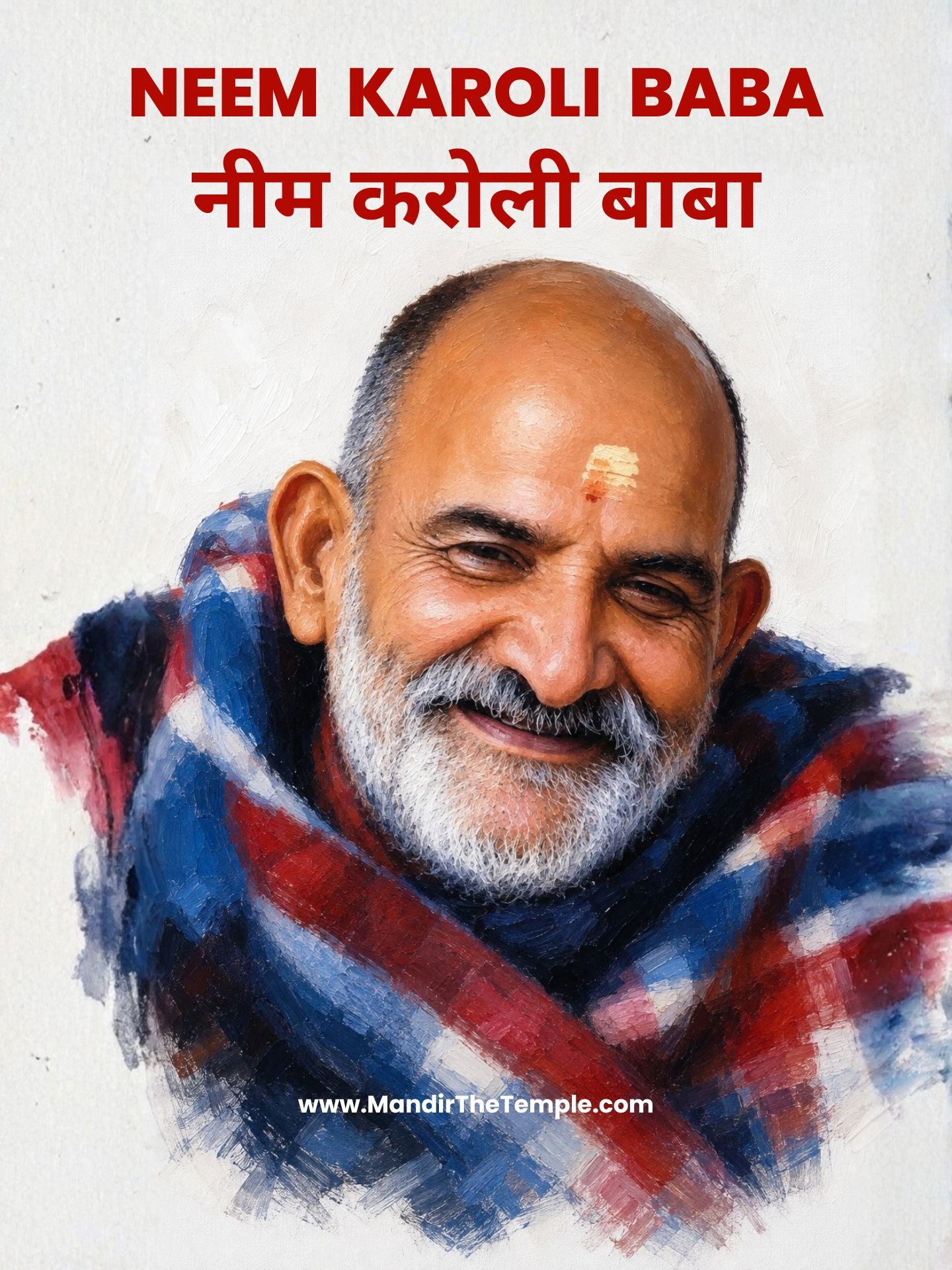
Although Neem Karoli Baba lived a life of simplicity and rarely spoke about himself, his spiritual influence travelled far beyond India. People from different countries, cultures and walks of life came to him seeking peace, guidance and spiritual understanding.
Today, his name is closely associated with Kainchi Dham in Uttarakhand, the sacred Vrindavan Ashram, the devotion of Lord Hanuman, and the lives of well-known spiritual seekers such as Ram Dass and Krishna Das.
His devotees believe that Maharaj Ji’s grace continues to guide people even after his Mahasamadhi in 1973.
In this detailed article, we explore Neem Karoli Baba’s real name, birth, family, early life, spiritual journey, connection with Hanuman Ji, Kainchi Dham, miracles, teachings, famous devotees and enduring legacy.
Table of Contents
2. Quick Facts About Neem Karoli Baba
3. Neem Karoli Baba’s Real Name
4. Birth and Early Life of Neem Karoli Baba
5. Neem Karoli Baba’s Family, Wife and Children
6. Why Was He Called Neem Karoli Baba?
8. Neem Karoli Baba’s Spiritual Journey
9. Neem Karoli Baba and Lord Hanuman
10. Kainchi Dham: The Sacred Ashram of Neem Karoli Baba
11. Neem Karoli Baba Miracles: Extraordinary Stories of Maharaj Ji
12. Teachings of Neem Karoli Baba
13. Famous Neem Karoli Baba Quotes
14. Ram Dass and Neem Karoli Baba: A Spiritual Connection That Changed Lives
15. Krishna Das and the Devotional Music of Maharaj Ji
16. Bhagavan Das and Other Famous Devotees
17. Steve Jobs and Neem Karoli Baba
18. Mark Zuckerberg’s Visit to Kainchi Dham
19. Other International Connections
20. Neem Karoli Baba’s Ashrams and Sacred Places
21. Neem Karoli Baba’s Mahasamadhi
22. The Meaning of Maharaj Ji’s Life
23. Books About Neem Karoli Baba
24. Films Based on Neem Karoli Baba
25. Documentaries on Neem Karoli Baba
26. Neem Karoli Baba’s Spiritual Legacy
27. Love Serve Remember Foundation
28. How to Remember Neem Karoli Baba in Daily Life
29. Kainchi Dham: A Short Visitor Guide
30. Frequently Asked Questions About Neem Karoli Baba
31. Final Thoughts: The Timeless Message of Neem Karoli Baba
References and Further Reading
1. Who Was Neem Karoli Baba?
Neem Karoli Baba was a revered Indian saint and spiritual master whose life was devoted to God, love, compassion and selfless service.
His followers affectionately called him Maharaj Ji. He was particularly associated with the worship of Lord Hanuman and the remembrance of Lord Ram.
Unlike many spiritual teachers who established elaborate philosophies, Maharaj Ji often communicated through simple words, humour, silence and personal interaction.
People who met him frequently described a feeling of unconditional acceptance. He welcomed people regardless of their wealth, social status, nationality or background.
For some, he was a spiritual guide. For others, he was a loving father figure. Many devotees considered him an embodiment of divine grace.
His teachings were not limited to religious rituals. He encouraged people to live spiritually through ordinary actions:
- Love others without discrimination.
- Feed the hungry.
- Help those who are suffering.
- Speak the truth.
- Remember God.
- Serve without ego.
- Maintain faith during difficult times.
Maharaj Ji’s spiritual tradition continues through his ashrams, devotees, books, devotional music and organisations inspired by his teachings.
2. Quick Facts About Neem Karoli Baba
| Particular | Details |
| Popular Name | Neem Karoli Baba |
| Other Spelling | Neeb Karori Baba |
| Devotees Call Him | Maharaj Ji |
| Birth Name | Lakshman Narayan Sharma |
| Birth | Around 1900 |
| Birthplace | Akbarpur, Uttar Pradesh |
| Spiritual Path | Bhakti and selfless service |
| Ishta Devata | Lord Hanuman |
| Wife | Ram Beti |
| Children | Two sons and one daughter, according to biographical accounts |
| Famous Ashram | Kainchi Dham, Uttarakhand |
| Other Important Ashram | Vrindavan |
| Mahasamadhi | September 1973 |
| Commonly Recorded Death Date | 11 September 1973 |
| Famous Devotees | Ram Dass, Krishna Das, Bhagavan Das |
| Famous Teaching | Love everyone, feed everyone, remember God, tell the truth |
Historical note: Neem Karoli Baba did not leave a conventional autobiography. His birth date, early movements, family details and certain incidents are described differently in various accounts. Some details are based on biographies and recollections of devotees. This article distinguishes commonly reported information from matters of faith and oral tradition.
3. Neem Karoli Baba’s Real Name
Neem Karoli Baba’s birth name is commonly recorded as Lakshman Narayan Sharma, also spelled Lakshmi Narayan Sharma in some accounts.
He was born into a Brahmin family in northern India around the beginning of the twentieth century.
As he travelled through different regions and became known among devotees, several names became associated with him. Neem Karoli Baba and Neeb Karori Baba are the most widely recognised names today.
His devotees usually address him as Maharaj Ji, a term of affection and respect.
The name Maharaj Ji is not simply a title. For many followers, it expresses their relationship with him as a loving spiritual guide.
4. Birth and Early Life of Neem Karoli Baba
Neem Karoli Baba is generally believed to have been born around 1900 in Akbarpur, Uttar Pradesh. Some biographical accounts identify the location with the present-day Ambedkar Nagar district, while other descriptions refer to the Firozabad region. Historical references should therefore be read with care.
His early childhood is not documented in the same detail as the lives of modern public figures.
Traditional accounts describe him as spiritually inclined from a young age. His life eventually took a path very different from the conventional expectations of family, profession and material success.
He was married at a young age, as was customary in many families of that period. His life included both family responsibilities and periods of spiritual wandering.
The contrast between his household life and his later renunciation is an important part of understanding his journey.
Rather than presenting him only as a mysterious saint, it is useful to remember that Maharaj Ji also experienced ordinary human relationships and responsibilities.
5. Neem Karoli Baba’s Family, Wife and Children
According to commonly repeated biographical accounts, Neem Karoli Baba’s wife’s name was Ram Beti.
He had two sons and one daughter.
Although he later became widely known as a wandering sadhu and spiritual master, his early life included marriage and family responsibilities.
Accounts of his life describe him leaving home for spiritual wandering and later returning at his father’s request to live a settled family life.
This part of his story is significant because it shows that his spiritual journey was not necessarily a single, uninterrupted departure from worldly life.
His followers remember him primarily as Maharaj Ji, but his family background is also part of the historical story.
6. Why Was He Called Neem Karoli Baba?
According to commonly cited accounts, the name Neem Karoli Baba comes from Neem Karoli (also written Neeb Karori), a village in the Farrukhabad district of Uttar Pradesh where he spent significant time during his early years.
A popular traditional account also links the name to the famous train story described later in this article (see Section 11.1). This story is part of devotional tradition rather than independently verified history.
The name is also written as Neeb Karori Baba or Neeb Karauri Baba.
Over time, the name became recognised across India and internationally through devotees, books and the spiritual centres associated with him.
The spelling differs across publications, but all these names generally refer to the same revered saint.
Today, the phrase Neem Karoli Baba is the most commonly used English name. In Hindi, he is commonly written as:
- नीम करोली बाबा
- नीब करौरी बाबा
- बाबा नीम करोली
- महाराज जी
- कैंची धाम वाले बाबा
7. Other Names of Maharaj Ji
Neem Karoli Baba was known by several names during different periods of his life and in different regions.
Some names associated with him include:
Baba Lakshman Das
A name connected with his earlier spiritual life and wandering years.
Tallaia-wale Baba
A regional name associated with a place where he stayed.
Tikonia-wale Baba
Another name remembered in local traditions.
Handi-wale Baba
A name appearing in accounts of his life and activities.
Chamatkari Baba
A name reflecting the extraordinary experiences and miracle stories shared by devotees.
Maharaj Ji
The most affectionate and widely used name among his followers.
These different names reflect the way his spiritual identity developed across places, communities and generations.
8. Neem Karoli Baba’s Spiritual Journey
The spiritual journey of Neem Karoli Baba is described through a combination of biographical accounts, oral traditions and recollections of devotees.
He is associated with several regions of northern India, including Uttar Pradesh, Gujarat and the Kumaon hills.
His journey included periods of wandering, meditation, devotion and service.
Early Renunciation
Accounts describe Maharaj Ji leaving home to pursue a spiritual life at a young age. Some narratives mention that he later returned to family life before undertaking another period of wandering.
The commonly repeated account states that he left home again in 1958 and travelled through northern India as a sadhu.
Because the chronology differs between accounts, it is better to understand this as a broad outline rather than a fully documented day-by-day biography.
The Gujarat Connection
Bavania in Gujarat is associated with an important period of his spiritual life.
Stories from this phase describe his simple living, spiritual practices and interactions with people who later remembered him with deep affection.
A Life of Simplicity
Maharaj Ji was not known for accumulating wealth or presenting himself as a conventional religious authority.
His followers remember him wearing simple clothing, sitting among people, accepting visitors and showing concern for their everyday problems.
He was particularly associated with feeding people and ensuring that visitors were cared for.
His Growing Spiritual Influence
As more people encountered him, his reputation spread across different parts of India.
The stories of his compassion, spiritual insight and extraordinary experiences attracted devotees from different backgrounds.
Eventually, Kainchi Dham and Vrindavan became two of the most important centres associated with his life.
9. Neem Karoli Baba and Lord Hanuman
Devotion to Lord Hanuman was at the heart of Neem Karoli Baba’s spiritual life.
Hanuman Ji is revered as the symbol of devotion, courage, humility, strength and selfless service.
These qualities are also central to the way devotees remember Maharaj Ji.
Many followers regard Neem Karoli Baba as an incarnation or manifestation of Lord Hanuman. This is an important devotional belief, rather than a claim that can be established through conventional historical evidence.
Why Was Maharaj Ji Associated With Hanuman Ji?
Several aspects of his life contributed to this belief:
- His deep devotion to Hanuman Ji.
- His association with Hanuman temples.
- His encouragement of Ram Naam and Hanuman worship.
- Stories of extraordinary grace and spiritual power.
- His emphasis on selfless service and humility.
For devotees, the connection is not merely symbolic. They experience Maharaj Ji as a living presence of Hanuman Ji’s compassion and grace.
The Importance of Hanuman Chalisa
The Hanuman Chalisa is an important devotional prayer among followers of Maharaj Ji.
Many devotees recite it while praying for courage, peace, strength and spiritual guidance.
The repetition of Ram Naam is also central to his devotional tradition.
Jai Hanuman! Jai Shri Ram! Jai Maharaj Ji!
10. Kainchi Dham: The Sacred Ashram of Neem Karoli Baba
Kainchi Dham is the most famous ashram associated with Neem Karoli Baba. Located in the Kumaon hills of Uttarakhand, it is a sacred place of devotion, prayer and remembrance.
The ashram lies on the Nainital–Almora road, surrounded by green hills and a peaceful natural setting.
For devotees, Kainchi Dham is not simply a temple or tourist destination. It is a place deeply connected with Maharaj Ji’s life, Hanuman devotion and his message of love and service.
History of Kainchi Dham
Kainchi Dham is commonly associated with 1964 as the year of its establishment, although some accounts differ about the precise early dates.
The complex developed around the spiritual presence of Maharaj Ji and the worship of Hanuman Ji.
Over time, it became one of the most important pilgrimage destinations associated with his legacy.
Why Is It Called Kainchi Dham?
The name Kainchi is sometimes incorrectly explained as referring to the scissor-like shape of the surrounding hills.
The Kumaon government website (kumaon.gov.in) explains that the name refers to two sharp hairpin bends in the road. It has no connection with scissors.
Why Do Devotees Visit Kainchi Dham?
People visit the ashram for many reasons:
- To seek the blessings of Maharaj Ji.
- To offer prayers to Lord Hanuman.
- To experience the peaceful atmosphere of the Kumaon hills.
- To participate in the annual Bhandara.
- To remember Maharaj Ji’s teachings.
- To spend time in prayer and reflection.
Kainchi Dham and the 15 June Bhandara
The annual Bhandara on 15 June is one of the most important events associated with Kainchi Dham.
Devotees gather for prayer, darshan and community service. Food is served to visitors as part of the tradition of feeding everyone.
The date should be understood as the annual Bhandara, not as a universally established birth anniversary of Neem Karoli Baba.
A Note for Visitors
Kainchi Dham is a place of worship. Visitors should respect the temple’s instructions, maintain cleanliness and follow the guidance of volunteers.
For complete information about how to reach the Dham, darshan timings, accommodation, nearby places and travel arrangements, see our dedicated Kainchi Dham Travel Guide.
11. Neem Karoli Baba Miracles: Extraordinary Stories of Maharaj Ji
Neem Karoli Baba is remembered by devotees for numerous extraordinary experiences associated with his life.
Stories about his spiritual powers, compassion, intuition and blessings have been shared through books, personal recollections and oral traditions.
For many devotees, these experiences are evidence of Maharaj Ji’s divine grace. Others approach them as spiritual stories that express faith and devotion.
The most important feature of these accounts is not simply the miraculous event itself, but the message of love, humility, service and surrender that devotees associate with Maharaj Ji.
11.1 The Famous Train Miracle
One of the most widely repeated stories about Neem Karoli Baba concerns a train journey.
According to the account, Maharaj Ji was travelling on a train without a ticket. Railway officials asked him to get down at a station near Neem Karoli village.
After he stepped off, the train reportedly refused to move, despite attempts to restart it.
Railway staff and passengers allegedly became concerned and eventually requested Maharaj Ji to board again.
The story says that after he returned to the train, it started moving.
This incident is often described as one of the famous miracles associated with Neem Karoli Baba.
Devotees interpret the story as a demonstration of his spiritual power and the limitations of human understanding.
The story also contributed to the popularity of the name Neem Karoli Baba.
11.2 The Miracle of Feeding Everyone
Among the many stories associated with Maharaj Ji, his concern for feeding people is especially prominent.
Devotees recall that he frequently arranged food for visitors, regardless of their background or financial circumstances.
Stories describe situations where food appeared insufficient for the number of people present, yet everyone was reportedly served.
Whether understood as a miracle or an expression of extraordinary generosity, these accounts reflect one of his most important teachings:
No one should go hungry when we have the ability to feed them.
This spirit of service continues through the Bhandara tradition at Kainchi Dham.
11.3 Stories of Healing and Divine Grace
Many devotees have shared personal experiences of receiving comfort, courage and relief after meeting Maharaj Ji or praying to him.
Some accounts describe physical healing, while others speak of emotional transformation, renewed faith or freedom from fear.
These experiences are deeply meaningful to those who share them.
However, such accounts should be understood as personal spiritual testimonies, not as medical evidence or a substitute for professional treatment.
For devotees, the deeper miracle is often the transformation of the heart.
11.4 Maharaj Ji’s Extraordinary Understanding of People
Another recurring theme in devotees’ recollections is Maharaj Ji’s apparent ability to understand a person’s concerns without being told everything.
People have described arriving with private worries and feeling that Maharaj Ji already understood their situation.
Such stories are often interpreted as examples of his spiritual insight.
They also illustrate why many followers regarded him not merely as a religious teacher but as a loving guide who understood human suffering.
11.5 The Miracle of Unconditional Love
Perhaps the most enduring miracle associated with Neem Karoli Baba was the love people felt in his presence.
Devotees from different countries, cultures and backgrounds described feeling accepted without judgment.
His affection was not limited to those who were educated, wealthy or spiritually accomplished.
He was remembered for treating ordinary people with the same warmth as prominent visitors.
This is why his teachings continue to inspire people who have never visited India or met him personally.
11.6 Understanding the Miracle Stories
Neem Karoli Baba’s miracles are an important part of his devotional legacy.
A responsible account should distinguish between:
- Historical details supported by published sources.
- Personal experiences shared by devotees.
- Religious interpretations and beliefs.
- Events that remain difficult to independently verify.
For followers, faith does not necessarily depend on proving every story. The teachings of love, service and remembrance remain meaningful in their own right.
12. Teachings of Neem Karoli Baba
The teachings of Maharaj Ji were simple, direct and deeply rooted in devotion.
He did not encourage people to become spiritual merely through intellectual discussion. Instead, he emphasised living with love, truth, humility and compassion.
His teachings can be understood through the following principles.
12.1 Love Everyone
Love everyone, regardless of who they are.
Maharaj Ji’s message of love was not restricted to family members, friends or people who shared the same beliefs.
It encouraged people to look beyond social divisions and recognise the dignity of every human being.
In daily life, this teaching means:
- Treat others with respect.
- Avoid unnecessary hatred.
- Forgive where possible.
- Help people without judging their status.
- Practise kindness even when it is difficult.
For devotees, love is not merely an emotion. It is a spiritual practice.
12.2 Feed Everyone
Feeding people is one of the most frequently remembered aspects of Maharaj Ji’s life.
The instruction to feed everyone expresses compassion in its simplest form.
A hungry person does not need a lecture on spirituality. They need food.
This principle connects devotion with practical service.
The annual Bhandara at Kainchi Dham reflects this tradition of community feeding.
12.3 Remember God
Maharaj Ji encouraged remembrance of God through prayer, devotion and the repetition of the divine name.
For many of his followers, Ram Naam is central to spiritual practice.
Remembering God does not necessarily mean withdrawing from daily responsibilities. It means keeping devotion alive while working, caring for family and helping others.
12.4 Tell the Truth
Truthfulness is an essential part of spiritual life.
A person who remembers God should also strive to be honest in speech and conduct.
Truth helps build trust, strengthens relationships and reduces the burden of deception.
12.5 Serve Others Without Ego
Selfless service is another important principle associated with Maharaj Ji.
Helping someone should not be merely a way to gain praise, recognition or personal advantage.
Service becomes spiritual when it is performed with humility and compassion.
Even small acts—helping an elderly person, sharing food, supporting someone in difficulty or offering a kind word—can become expressions of devotion.
12.6 Practise Humility
Maharaj Ji lived simply and is remembered for his direct, unpretentious manner.
His life reminds devotees that spirituality is not measured by wealth, status, clothing or public recognition.
Humility allows a person to learn, serve and love without constantly seeking importance.
12.7 Have Faith During Difficult Times
Faith does not mean that a person will never experience illness, loss, uncertainty or disappointment.
Rather, faith can provide strength to face life’s difficulties with courage and hope.
Many devotees remember Maharaj Ji during periods of personal hardship, seeking the inner strength to continue with patience and trust.
12.8 Keep Devotion Practical
The central message of Maharaj Ji’s teachings is that spirituality should be visible in everyday conduct.
A person may visit a temple, recite prayers and perform rituals, but genuine devotion should also be reflected in kindness, truthfulness and service.
This is one reason his teachings continue to appeal to people from different religious and cultural backgrounds.
13. Famous Neem Karoli Baba Quotes
The sayings associated with Neem Karoli Baba are widely shared by devotees.
Some are direct recollections, while others are shortened or translated versions of teachings passed through books and oral tradition.
The best-known teaching is:
“Love Everyone, Feed Everyone, Remember God, Tell the Truth.”
This saying brings together the central principles associated with Maharaj Ji.
- Love Everyone: Treat all people with compassion.
- Feed Everyone: Serve the hungry and those in need.
- Remember God: Keep devotion alive in daily life.
- Tell the Truth: Practise honesty and integrity.
Other short sayings and expressions associated with his devotional tradition include:
- “Sub Ek” — All are one.
- “Ram Naam” — Remember the divine name of Lord Ram.
- “Love everyone.”
- “Remember God.”
The Spiritual Meaning of His Famous Teaching
The message is powerful because it combines inner devotion with outward action.
Love changes how we treat people.
Feeding others turns compassion into service.
Remembering God gives life a spiritual direction.
Truthfulness brings integrity to our actions.
Together, these principles form a practical path of devotion.
14. Ram Dass and Neem Karoli Baba: A Spiritual Connection That Changed Lives
One of the most influential relationships in the international legacy of Neem Karoli Baba was with Richard Alpert, who later became known as Ram Dass.
Ram Dass was an American psychologist and spiritual seeker whose encounter with Maharaj Ji in India deeply influenced his life.
His journey became an important bridge between Indian spirituality and Western audiences.
Who Was Ram Dass?
Richard Alpert was associated with Harvard University and became known for his work in psychology and consciousness studies.
During a period of personal and spiritual searching, he travelled to India.
There he met Neem Karoli Baba, an encounter that became a turning point in his life.
In 1967, Maharaj Ji gave him the name Ram Dass, meaning servant of God (or servant of Ram).
How Did Neem Karoli Baba Influence Ram Dass?
Ram Dass often described Maharaj Ji as his spiritual teacher.
The relationship influenced his understanding of love, devotion, service and the nature of spiritual life.
Rather than focusing only on intellectual knowledge, Ram Dass increasingly emphasised direct experience, compassion and being present.
Be Here Now
Ram Dass’s book Be Here Now, published in 1971, became one of the best-known spiritual books of the twentieth century.
It introduced many Western readers to meditation, yoga, Indian spiritual traditions and the importance of living in the present.
Although the book reflects Ram Dass’s own journey, his relationship with Maharaj Ji is an important part of its background.
Miracle of Love
Ram Dass also wrote Miracle of Love: Stories About Neem Karoli Baba.
The book brings together recollections and experiences shared by people who encountered Maharaj Ji.
It is one of the most widely recognised sources for devotees interested in his life and the stories associated with him.
15. Krishna Das and the Devotional Music of Maharaj Ji
Krishna Das is an American devotional singer and kirtan artist whose spiritual journey is closely associated with Neem Karoli Baba.
He became known internationally for devotional chanting and music inspired by Indian spiritual traditions.
Krishna Das’s Connection With Maharaj Ji
Krishna Das travelled to India during a period of spiritual searching and encountered Maharaj Ji.
His experiences influenced his devotional practice and his lifelong connection with chanting.
Through music, he has helped introduce audiences around the world to the practice of kirtan.
Why Is Krishna Das Important?
His music demonstrates how Maharaj Ji’s spiritual influence continued beyond his physical presence.
Devotional chanting, remembrance of Ram and Hanuman worship remain important elements of the community inspired by Maharaj Ji.
For many listeners, Krishna Das’s music offers a way to experience devotion through sound and repetition of the divine name.
16. Bhagavan Das and Other Famous Devotees
Neem Karoli Baba attracted devotees from different parts of the world.
Some became known through books, music, spiritual teaching and humanitarian work.
Bhagavan Das
Bhagavan Das was an American spiritual seeker associated with Maharaj Ji.
His spiritual journey and experiences form part of the wider story of Western devotees who travelled to India in search of spiritual understanding.
Siddhi Ma
Siddhi Ma is remembered as a close devotee of Maharaj Ji and an important figure in the continuation of his spiritual tradition.
Her association with Maharaj Ji is significant in accounts of the community surrounding him.
Larry Brilliant
Larry Brilliant is among the people associated with Maharaj Ji’s international circle of devotees.
His later work in public health and humanitarian service is often discussed in connection with the broader influence of spirituality and service.
Why Did So Many Western Seekers Visit Maharaj Ji?
During the 1960s and 1970s, many Western seekers travelled to India in search of spiritual knowledge, meditation and a different understanding of life.
Neem Karoli Baba became one of the spiritual figures associated with this movement.
His appeal was not based on elaborate philosophy or a complex system of initiation.
His teachings of love, service, devotion and simplicity were accessible to people from very different backgrounds.
17. Steve Jobs and Neem Karoli Baba
The connection between Steve Jobs and Neem Karoli Baba is one of the most widely discussed stories linking Maharaj Ji with the modern technology world.
Steve Jobs, co-founder of Apple, travelled to India during his early adulthood while searching for spiritual understanding.
Steve Jobs’s Journey to India
In April 1974, Steve Jobs travelled to India with his friend Dan Kottke.
The journey was part of a period of personal and spiritual exploration.
Jobs reportedly intended to visit Neem Karoli Baba, whose reputation had reached Western spiritual seekers.
However, Maharaj Ji had already passed away in September 1973.
Therefore, Steve Jobs did not meet Neem Karoli Baba.
Why Is the Connection Still Important?
The story illustrates how Maharaj Ji’s spiritual influence reached people who were not directly connected with his ashrams or traditional devotional communities.
Jobs’s journey to India is often discussed as part of his wider search for simplicity, insight and spiritual experience.
The connection should be described accurately: Jobs travelled to India intending to seek Maharaj Ji, but arrived after the saint’s passing.
18. Mark Zuckerberg’s Visit to Kainchi Dham
Mark Zuckerberg, co-founder of Facebook, visited Kainchi Dham in 2015.
His visit brought renewed international attention to the ashram and its association with Neem Karoli Baba.
The Steve Jobs Connection
Zuckerberg later spoke about the visit in the context of advice from Steve Jobs.
Jobs had reportedly suggested that Zuckerberg visit a temple in India during a difficult period.
Zuckerberg’s visit to Kainchi Dham became widely discussed after he mentioned it publicly.
Why Did the Visit Attract Attention?
The visit connected a famous technology entrepreneur with a spiritual destination in the Kumaon hills.
For many people, it also introduced Kainchi Dham to a new international audience.
However, the spiritual significance of the ashram is much older than its association with technology leaders.
For devotees, Kainchi Dham remains primarily a sacred place connected with Maharaj Ji and Hanuman Ji.
19. Other International Connections
Neem Karoli Baba’s influence has been discussed in connection with several international personalities and spiritual seekers.
Julia Roberts has been associated with an interest in Hindu spirituality and Neem Karoli Baba. According to published accounts, a photograph of Maharaj Ji drew her towards Hinduism.
However, interest, personal devotion and a confirmed physical visit are different claims. They should not be treated as interchangeable.
In India, cricketer Virat Kohli and actress Anushka Sharma have also visited Kainchi Dham, according to news reports.
The broader international legacy of Maharaj Ji is more securely reflected in the books, music, organisations and personal recollections of his devotees.
20. Neem Karoli Baba’s Ashrams and Sacred Places
The spiritual legacy of Neem Karoli Baba is associated with several ashrams and locations in India and abroad.
These places are important to devotees because they connect the saint’s life with prayer, service, remembrance and Hanuman devotion.
20.1 Kainchi Dham, Uttarakhand
Kainchi Dham is the best-known ashram associated with Maharaj Ji.
Located in the Kumaon hills, it is famous for its Hanuman temple, devotional atmosphere and annual Bhandara on 15 June.
It remains one of the most visited spiritual destinations associated with him.
20.2 Vrindavan Ashram, Uttar Pradesh
Vrindavan holds special importance in Maharaj Ji’s life because he attained Mahasamadhi there in September 1973.
His samadhi shrine is located at the Vrindavan Ashram.
Devotees visit the place to offer prayers, remember Maharaj Ji and participate in devotional activities.
20.3 Bhumiadhar Ashram
Bhumiadhar is another important location associated with Maharaj Ji in the Kumaon region.
It is included in accounts of his spiritual presence in Uttarakhand.
20.4 Kakrighat
Kakrighat is a sacred place in the Kumaon region associated with spiritual traditions and locations connected with Maharaj Ji.
It forms part of the wider network of places devotees may explore while visiting the region.
20.5 Hanuman Garhi, Nainital
Hanuman Garhi is a well-known Hanuman temple in Nainital.
It is often included in devotional travel plans for people visiting Kainchi Dham and other sacred sites in the Kumaon hills.
20.6 Rishikesh
Rishikesh is associated with the wider spiritual tradition and ashram network connected with Maharaj Ji.
Visitors should confirm the current status and access arrangements of specific centres before planning a visit.
20.7 Lucknow, Shimla and Delhi
Centres associated with Maharaj Ji’s name and followers are also reported in Lucknow, Shimla and Delhi.
These locations reflect the spread of his devotional tradition beyond the original centres of his life.
20.8 Neem Karoli Village
Neem Karoli village, in the Farrukhabad district of Uttar Pradesh, is associated with the name by which the saint became widely known.
It is part of the historical and devotional geography connected with his life.
20.9 Taos, New Mexico, USA
Neem Karoli Baba’s spiritual influence also reached the United States.
The ashram in Taos, New Mexico, is associated with the international community of devotees and the spiritual organisations inspired by Maharaj Ji.
It reflects the continuing connection between Indian devotional traditions and spiritual seekers around the world.
21. Neem Karoli Baba’s Mahasamadhi
Neem Karoli Baba attained Mahasamadhi in September 1973.
The commonly recorded date of his passing is 11 September 1973, although some devotional observances and accounts refer to 10 September.
Biographical accounts state that he became seriously unwell while travelling and was taken to a hospital in Vrindavan.
Some accounts describe his final illness as involving a diabetic coma. Details of the final hours differ between retellings, so they should be presented with appropriate care.
His passing marked the end of his physical presence but not the end of his spiritual influence.
Where Is Neem Karoli Baba’s Samadhi?
His samadhi is located at the Vrindavan Ashram in Uttar Pradesh.
For devotees, the samadhi is a sacred place of remembrance, prayer and connection with Maharaj Ji.
People continue to visit the ashram to offer prayers and remember his teachings.
Did Neem Karoli Baba’s Teachings End With His Passing?
No.
His teachings continue through:
- Kainchi Dham and other ashrams.
- Books and personal recollections.
- Devotional music and kirtan.
- Spiritual organisations.
- The lives and service of devotees.
- The everyday practice of love, truth and compassion.
His physical departure in 1973 did not end the influence of his message.
22. The Meaning of Maharaj Ji’s Life
The life of Neem Karoli Baba offers a spiritual message that is both simple and demanding.
It is simple because the central principles can be expressed in a few words: love, feed, remember and tell the truth.
It is demanding because living these principles consistently requires patience, humility and compassion.
His devotees remember him not only for extraordinary stories but also for his concern for ordinary people.
The hungry person, the suffering person, the confused seeker and the visitor who came with a personal problem were all part of the world he served.
This is why Maharaj Ji’s message continues to resonate with people across generations.
A Message for Modern Life
In a world often driven by competition, anxiety and material achievement, his teachings encourage people to pause and remember what matters.
A little kindness can change someone’s day.
A shared meal can restore dignity.
A truthful word can build trust.
A moment of prayer can bring peace.
And service offered without expectation can become a form of devotion.
This is the living message of Neem Karoli Baba.
23. Books About Neem Karoli Baba
Books about Neem Karoli Baba help readers understand his life, teachings, devotees and spiritual influence. Some books are based on personal experiences and devotional accounts rather than conventional historical biographies.
1. Miracle of Love: Stories About Neem Karoli Baba
Author: Ram Dass
One of the best-known books associated with Maharaj Ji, Miracle of Love brings together stories and recollections from people who encountered Neem Karoli Baba.
The book describes his compassion, humour, unusual behaviour, spiritual guidance and the experiences of devotees.
It is especially valuable for readers who want to understand how his followers experienced his presence.
2. Be Here Now
Author: Ram Dass
Although not exclusively a biography of Neem Karoli Baba, Be Here Now is closely connected with Ram Dass’s spiritual journey and his experiences in India.
The book explores mindfulness, spiritual awareness, meditation and the search for a deeper understanding of life.
3. Books and writings by devotees
Several devotees have written about their experiences with Maharaj Ji, including his teachings, daily life and influence on their spiritual paths.
Readers should remember that devotional books may contain personal interpretations and miracle accounts. They are valuable for understanding faith and spiritual experience, but every story should not automatically be treated as independently verified history.
24. Films Based on Neem Karoli Baba
Interest in Neem Karoli Baba has also reached Indian cinema.
Shree Baba Neeb Karori Maharaj
The Hindi biographical film Shree Baba Neeb Karori Maharaj, directed by Sharad Singh Thakur and featuring Subodh Bhave in the titular role, was released in theatres on 24 April 2026.
The film focuses on the saint’s life and spiritual journey.
Hanuman Ansh (2026)
Hanuman Ansh, written and directed by Vishal Chaturvedi, was released in Indian theatres on 7 August 2026 after its release date was moved from an earlier schedule.
The Hindi devotional drama is inspired by the life and teachings of Neem Karoli Baba and explores themes of faith, service and inner transformation. According to PTI, the story follows Dr Ram Bhosle, an Indian freedom fighter whose journey from an underground rebel to a yogi unfolds under the guidance of Maharaj Ji.
The film had a slow start at the box office but gained momentum through word of mouth. Trade website Sacnilk reported about ₹73 crore in gross collections by early September 2026. Hombale Films announced a worldwide release on 11 September 2026 through Hombale Overseas, a date that coincides with the anniversary of Maharaj Ji’s Mahasamadhi. The director has also confirmed a sequel, and the film was conceived as the first part of a trilogy based on his book Divine Detour.
The film presents a cinematic interpretation of his life; viewers should distinguish dramatized storytelling from documented historical facts.
25. Documentaries on Neem Karoli Baba
Documentaries and independent films offer another way to explore Maharaj Ji’s life and the experiences of his devotees.
Windfall of Grace
Windfall of Grace is a documentary film directed by Japna Tulsi and Sandip Pokhrel. It explores Neem Karoli Baba through devotees’ recollections, spiritual locations and devotional music.
The film was officially released online in April 2021.
Moved by Grace
Moved by Grace presents stories of devotees whose spiritual lives were influenced by Maharaj Ji.
The documentary uses the atmosphere of the Kainchi Dham Bhandara and different renditions of the Hanuman Chalisa to explore faith, devotion and grace.
It was released on December 1, 2022, according to the film’s official website.
American Yogi
American Yogi is a documentary film directed by Steven Newmark and based on the life of Neem Karoli Baba.
It also provides broader context for the spiritual movement and the influence of Indian teachers on Western seekers who travelled to India in search of spiritual understanding.
26. Neem Karoli Baba’s Spiritual Legacy
Neem Karoli Baba’s legacy is not limited to one temple, one country or one generation.
His devotees continue to remember him through:
- Hanuman worship and devotion
- Ram Naam and prayer
- Feeding people and serving the needy
- Satsang and devotional music
- Visits to Kainchi Dham and other associated ashrams
- Sharing stories of compassion and spiritual transformation
His influence can be seen in the lives of Indian and international devotees, musicians, writers, spiritual seekers and people who discovered his teachings through books and the internet.
For many devotees, Maharaj Ji remains a living spiritual presence.
27. Love Serve Remember Foundation
The Love Serve Remember Foundation is associated with preserving and sharing the teachings and legacy of Ram Dass.
Its work reflects themes that are also central to the spiritual journey of Ram Dass after meeting Neem Karoli Baba: love, service, remembrance and conscious living.
Readers interested in the Western spiritual movement surrounding Maharaj Ji may explore the writings, recordings and teachings of Ram Dass.
28. How to Remember Neem Karoli Baba in Daily Life
Devotion does not necessarily require travelling to an ashram or performing elaborate rituals.
The spirit of Maharaj Ji’s teachings can be reflected in simple daily actions.
1. Remember God
Spend a few quiet moments in prayer, meditation or remembrance.
2. Practise kindness
Speak gently. Avoid hurting others unnecessarily. Treat people with dignity.
3. Feed someone
Offer food to a person in need, support a community kitchen or participate in a Bhandara.
4. Serve without expectation
Help someone without expecting praise, recognition or reward.
5. Practise truthfulness
Be honest in your words, decisions and actions.
6. Remember Hanuman Ji
Many devotees remember Maharaj Ji through Hanuman devotion, Hanuman Chalisa recitation and Ram Naam.
These practices are devotional choices, not compulsory rules.
29. Kainchi Dham: A Short Visitor Guide
Kainchi Dham is one of the most important places associated with Neem Karoli Baba.
Located in Uttarakhand’s Kumaon region, the ashram attracts devotees from India and abroad.
What makes Kainchi Dham special?
- It is closely associated with Maharaj Ji’s spiritual life.
- The temple complex has a strong connection with Hanuman devotion.
- The annual Bhandara on June 15 draws large numbers of devotees.
- Visitors come for prayer, darshan and a peaceful spiritual experience.
How to plan a visit
Before travelling, check current ashram arrangements, local transport, weather and visitor information.
The annual Bhandara can be extremely crowded, so plan your journey and accommodation well in advance.
Read our detailed Kainchi Dham Travel Guide for how to reach, travel planning, accommodation and Bhandara information.
30. Frequently Asked Questions About Neem Karoli Baba
1. Who was Neem Karoli Baba?
Neem Karoli Baba, also known as Maharaj Ji, was a revered Indian saint known for his devotion to Hanuman Ji, compassion, simplicity and influence on devotees in India and abroad.
2. What was Neem Karoli Baba’s real name?
He is commonly identified as Lakshman Narayan Sharma. Historical and devotional accounts sometimes use variations of his name.
3. When was Neem Karoli Baba born?
His birth year is commonly given as around 1900, but the exact date is not consistently documented. Some traditions observe 1 December as his birth anniversary.
4. Where was Neem Karoli Baba born?
He is commonly associated with Akbarpur in present-day Uttar Pradesh. Some sources differ regarding the district attribution.
5. Why is he called Neem Karoli Baba?
The name is associated with Neem Karoli village in the Farrukhabad district of Uttar Pradesh, where accounts of his spiritual life and travels connect him with the name.
6. What is the meaning of Maharaj Ji?
Maharaj Ji is a respectful form of address used by devotees for Neem Karoli Baba.
7. Was Neem Karoli Baba a devotee of Hanuman Ji?
Yes. He is strongly associated with Hanuman devotion, and many devotees regard him as a great Hanuman bhakt.
8. What is Neem Karoli Baba famous for?
He is remembered for his compassion, simplicity, devotional teachings, stories of miracles and influence on spiritual seekers around the world.
9. When did Neem Karoli Baba die?
His Mahasamadhi is commonly dated September 11, 1973, although some accounts give September 10.
10. Where did Neem Karoli Baba take Mahasamadhi?
He passed away in Vrindavan, Uttar Pradesh.
11. Where is Neem Karoli Baba’s Samadhi?
His Samadhi is at the Vrindavan ashram, a major place of pilgrimage for devotees.
12. What is Kainchi Dham?
Kainchi Dham is an ashram and temple complex in Uttarakhand associated with Neem Karoli Baba and Hanuman Ji.
13. Why is Kainchi Dham famous?
It is known for its connection with Maharaj Ji, Hanuman devotion, spiritual atmosphere and annual June 15 Bhandara.
14. When is the Kainchi Dham Bhandara?
The annual Bhandara is traditionally held on June 15.
15. Is June 15 Neem Karoli Baba’s birthday?
June 15 is primarily associated with the annual Kainchi Dham Bhandara. It should not automatically be described as his confirmed birth anniversary. Some traditions observe 1 December as his birth anniversary.
16. What is the famous teaching of Neem Karoli Baba?
A widely circulated teaching associated with Maharaj Ji is:
“Love Everyone, Feed Everyone, Remember God, Tell the Truth.”
17. Did Steve Jobs meet Neem Karoli Baba?
No. Steve Jobs and Dan Kottke travelled to India in 1974, after Maharaj Ji’s death in September 1973.
18. Did Mark Zuckerberg visit Kainchi Dham?
Yes. Mark Zuckerberg visited Kainchi Dham in 2015 and later discussed the significance of the visit in connection with advice from Steve Jobs.
19. Who was Ram Dass?
Ram Dass, born Richard Alpert, was an American spiritual teacher and author who travelled to India and became a devotee of Neem Karoli Baba.
20. Which book is famous about Neem Karoli Baba?
Miracle of Love: Stories About Neem Karoli Baba by Ram Dass is among the best-known books about him.
21. Are Neem Karoli Baba’s miracles historically proven?
Many miracle stories come from devotees’ personal experiences and oral traditions. They are important to the faith of followers, but should be presented as devotional accounts rather than independently established historical facts.
22. Can anyone visit Kainchi Dham?
Yes, devotees and visitors are welcome, subject to the ashram’s current arrangements, rules and opening schedule. Check current information before travelling.
23. Is there an entry fee at Kainchi Dham?
There is generally no entry fee for darshan. Visitors should follow the ashram’s published guidance, especially during special events.
24. What is the best time to visit Kainchi Dham?
Many visitors prefer planning around comfortable weather and manageable crowds. The June 15 Bhandara is spiritually significant but can be exceptionally crowded.
25. How can I follow Neem Karoli Baba’s teachings?
Remember God, practise kindness, feed people, serve others, speak truthfully and approach life with humility and compassion.
26. Which films are based on Neem Karoli Baba?
Shree Baba Neeb Karori Maharaj (released 24 April 2026) and Hanuman Ansh (released 7 August 2026) are inspired by his life and teachings. Documentaries include Windfall of Grace, Moved by Grace and American Yogi.
31. Final Thoughts: The Timeless Message of Neem Karoli Baba
Neem Karoli Baba’s life continues to inspire millions of devotees across the world.
He did not become known for elaborate philosophical lectures or a complicated spiritual system. His influence is remembered through love, devotion, service, simplicity and the countless stories shared by people who believe their lives were transformed by his grace.
For some, he is Maharaj Ji. For others, he is a guide, a saint, a devotee of Hanuman Ji or a source of strength during difficult times.
His message remains deeply practical:
Love people. Feed the hungry. Remember God. Speak the truth.
The legacy of Neem Karoli Baba continues not only in temples and ashrams but also in every act of kindness performed in his name.
Jai Maharaj Ji. Jai Hanuman.
References and Further Reading
- Kumaon Government – Kainchi Dham information https://kumaon.gov.in/?p=6878
- Wikipedia – Neem Karoli Baba https://en.wikipedia.org/wiki/Neem_Karoli_Baba
- Penguin India – Who was Neem Karoli Baba? (excerpt from Sri Siddhi Ma) https://www.penguin.co.in/who-was-neem-karoli-baba/
- Swami Chidananda – Baba Neem Karoli: A Wonder Mystic of Northern India (Divine Life Society) https://www.dlshq.org/?p=1864
- Osho News – Neem Karoli Baba aka Maharaj-ji https://www.oshonews.com/2014/05/neem-karoli-baba/
- Windfall of Grace – Documentary and film information https://www.windfallofgrace.com/
- Moved by Grace – Film information https://www.windfallofgrace.com/moved-by-grace
- Love Serve Remember Foundation – Ram Dass teachings and archive https://www.ramdass.org/
- Miracle of Love: Stories About Neem Karoli Baba – Ram Dass.
- Be Here Now – Ram Dass.
- IANS – Subodh Bhave on Shree Baba Neeb Karori Maharaj (21 April 2026) https://ianslive.in/subodh-bhave-on-shree-baba-neeb-karori-maharaj-baba-chose-me-to-portray-him–20260421114242
- PTI via DT Next – Hanuman Ansh set for worldwide release on September 11 https://www.dtnext.in/entertainment/cinema/hanuman-ansh-set-for-worldwide-release-on-september-11
- Hollywood Reporter India – Hanuman Ansh gets global release and sequel https://www.hollywoodreporterindia.com/features/insight/the-sleeper-hit-nobody-saw-coming-hanuman-ansh-gets-a-sequel-and-a-global-release
- UNI – Hanuman Ansh to release worldwide on September 11 https://www.uniindia.com/ent-hanuman-ansh-release/168412
Also read