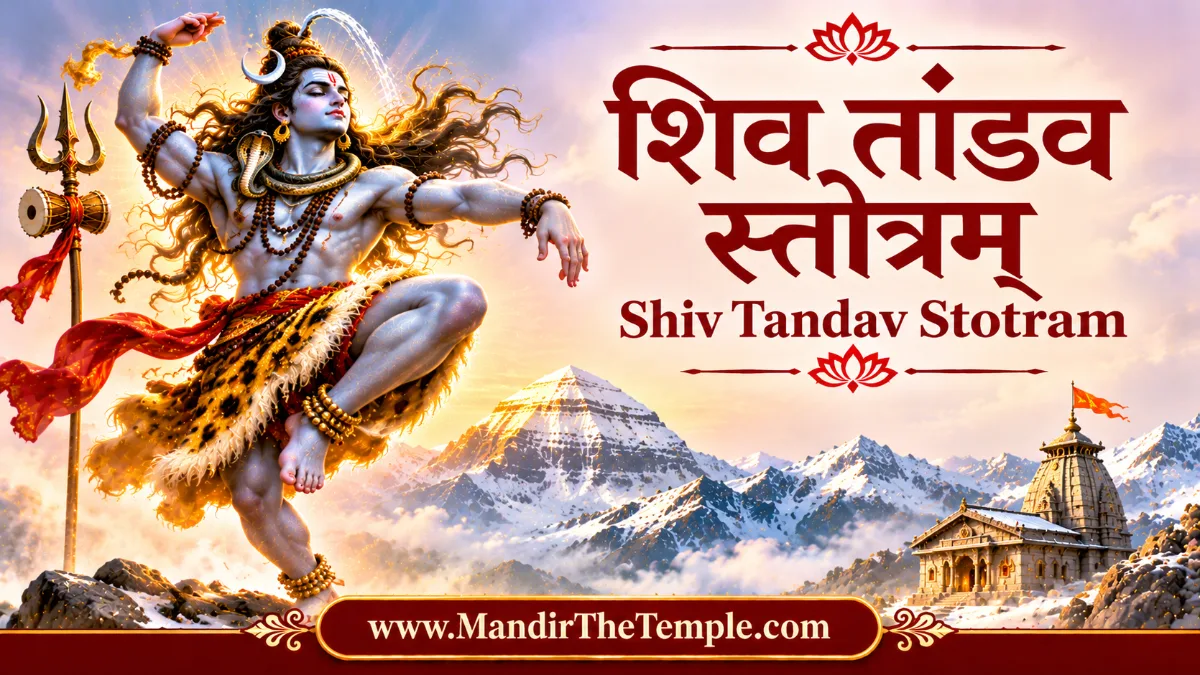
Shiv Tandav Stotram is a powerful Sanskrit hymn to Lord Shiva composed by Ravana, king of Lanka, describing Shiva’s fierce Tandava dance. Beginning “Jatatavigalajjalapravahapavitasthale”, its rhythm echoes the beat of the damru, filling the mind with energy as you read or hear it. Below are the full Sanskrit text, English transliteration, the meaning of every verse, the story behind it and the method of recitation.
Shiv Tandav Stotram lyrics in English
Jatatavi Galajjala Pravaha Pavitasthale
Gale’valambya Lambitam Bhujanga Tunga Malikam ।
Damad Damad Damad Daman Ninadavad Damarvayam
Chakara Chanda Tandavam Tanotu Nah Shivah Shivam ॥ 1 ॥
Jata Kataha Sambhrama Bhraman Nilimpa Nirjhari
Vilola Vichi Vallari Virajamana Murdhani ।
Dhagad Dhagad Dhagaj Jvalal Lalata Patta Pavake
Kishora Chandra Shekhare Ratih Pratikshanam Mama ॥ 2 ॥
Dharadharendra Nandini Vilasa Bandhu Bandhura
Sphurad Diganta Santati Pramodamana Manase ।
Kripa Kataksha Dhorani Niruddha Durdharapadi
Kvachid Digambare Mano Vinodametu Vastuni ॥ 3 ॥
Jata Bhujanga Pingala Sphurat Phana Mani Prabha
Kadamba Kunkuma Drava Pralipta Digvadhu Mukhe ।
Madandha Sindhura Sphurat Tvag Uttariya Medure
Mano Vinodam Adbhutam Bibhartu Bhuta Bhartari ॥ 4 ॥
Sahasra Lochana Prabhrityashesha Lekha Shekhara
Prasuna Dhuli Dhorani Vidhusaranghri Pithabhuh ।
Bhujangaraja Malaya Nibaddha Jata Jutakah
Shriyai Chiraya Jayatam Chakora Bandhu Shekharah ॥ 5 ॥
Lalata Chatvara Jvalad Dhananjaya Sphulinga Bha
Nipita Pancha Sayakam Naman Nilimpa Nayakam ।
Sudha Mayukha Lekhaya Virajamana Shekharam
Maha Kapali Sampade Shiro Jatalam Astu Nah ॥ 6 ॥
Karala Bhala Pattika Dhagad Dhagad Dhagaj Jvalad
Dhananjayahuti Krita Prachanda Pancha Sayake ।
Dharadharendra Nandini Kuchagra Chitra Patraka
Prakalpanaika Shilpini Trilochane Ratir Mama ॥ 7 ॥
Navina Megha Mandali Niruddha Durdhara Sphurat
Kuhu Nishithini Tamah Prabandha Baddha Kandharah ।
Nilimpa Nirjhari Dharas Tanotu Kritti Sindhurah
Kala Nidhana Bandhurah Shriyam Jagad Dhurandharah ॥ 8 ॥
Praphulla Nila Pankaja Prapancha Kalima Prabha
Valambi Kantha Kandali Ruchi Prabaddha Kandharam ।
Smarachchhidam Purachchhidam Bhavachchhidam Makhachchhidam
Gajachchhidandhakachchhidam Tam Antakachchhidam Bhaje ॥ 9 ॥
Akharva Sarva Mangala Kala Kadamba Manjari
Rasa Pravaha Madhuri Vijrimbhana Madhuvratam ।
Smarantakam Purantakam Bhavantakam Makhantakam
Gajantakandhakantakam Tam Antakantakam Bhaje ॥ 10 ॥
Jayatvad Abhra Vibhrama Bhramad Bhujangam Ashvasad
Vinirgamat Krama Sphurat Karala Bhala Havyavat ।
Dhimid Dhimid Dhimid Dhvanan Mridanga Tunga Mangala
Dhvani Krama Pravartita Prachanda Tandavah Shivah ॥ 11 ॥
Drishad Vichitra Talpayor Bhujanga Mauktika Srajor
Garishtha Ratna Loshthayoh Suhrid Vipaksha Pakshayoh ।
Trinaravinda Chakshushoh Praja Mahi Mahendrayoh
Sama Pravrittikah Kada Sadashivam Bhajamyaham ॥ 12 ॥
Kada Nilimpa Nirjhari Nikunja Kotare Vasan
Vimukta Durmatih Sada Shirahstham Anjalim Vahan ।
Vimukta Lola Lochano Lalama Bhala Lagnakah
Shiveti Mantram Uchcharan Kada Sukhi Bhavamyaham ॥ 13 ॥
Phalashruti
Imam Hi Nityam Evam Uktam Uttamottamam Stavam
Pathan Smaran Bruvan Naro Vishuddhim Eti Santatam ।
Hare Gurau Subhaktim Ashu Yati Nanyatha Gatim
Vimohanam Hi Dehinam Sushankarasya Chintanam ॥ 14 ॥
Puja Vasana Samaye Dashavaktra Gitam
Yah Shambhu Pujana Param Pathati Pradoshe ।
Tasya Sthiram Ratha Gajendra Turanga Yuktam
Lakshmim Sadaiva Sumukhim Pradadati Shambhuh ॥ 15 ॥
Iti Shri Ravana Kritam Shiva Tandava Stotram Sampurnam
Shiv Tandav Stotram in Sanskrit
जटाटवीगलज्जलप्रवाहपावितस्थले
गलेऽवलम्ब्य लम्बितां भुजङ्गतुङ्गमालिकाम् ।
डमड्डमड्डमड्डमन्निनादवड्डमर्वयं
चकार चण्डताण्डवं तनोतु नः शिवः शिवम् ॥ १ ॥
जटाकटाहसम्भ्रमभ्रमन्निलिम्पनिर्झरी-
विलोलवीचिवल्लरीविराजमानमूर्धनि ।
धगद्धगद्धगज्ज्वलल्ललाटपट्टपावके
किशोरचन्द्रशेखरे रतिः प्रतिक्षणं मम ॥ २ ॥
धराधरेन्द्रनन्दिनीविलासबन्धुबन्धुर-
स्फुरद्दिगन्तसन्ततिप्रमोदमानमानसे ।
कृपाकटाक्षधोरणीनिरुद्धदुर्धरापदि
क्वचिद्दिगम्बरे मनो विनोदमेतु वस्तुनि ॥ ३ ॥
जटाभुजङ्गपिङ्गलस्फुरत्फणामणिप्रभा-
कदम्बकुङ्कुमद्रवप्रलिप्तदिग्वधूमुखे ।
मदान्धसिन्धुरस्फुरत्त्वगुत्तरीयमेदुरे
मनो विनोदमद्भुतं बिभर्तु भूतभर्तरि ॥ ४ ॥
सहस्रलोचनप्रभृत्यशेषलेखशेखर-
प्रसूनधूलिधोरणी विधूसराङ्घ्रिपीठभूः ।
भुजङ्गराजमालया निबद्धजटाजूटकः
श्रियै चिराय जायतां चकोरबन्धुशेखरः ॥ ५ ॥
ललाटचत्वरज्वलद्धनञ्जयस्फुलिङ्गभा-
निपीतपञ्चसायकं नमन्निलिम्पनायकम् ।
सुधामयूखलेखया विराजमानशेखरं
महाकपालिसम्पदे शिरोजटालमस्तु नः ॥ ६ ॥
करालभालपट्टिकाधगद्धगद्धगज्ज्वल-
द्धनञ्जयाहुतीकृतप्रचण्डपञ्चसायके ।
धराधरेन्द्रनन्दिनीकुचाग्रचित्रपत्रक-
प्रकल्पनैकशिल्पिनि त्रिलोचने रतिर्मम ॥ ७ ॥
नवीनमेघमण्डलीनिरुद्धदुर्धरस्फुरत्-
कुहूनिशीथिनीतमः प्रबन्धबद्धकन्धरः ।
निलिम्पनिर्झरीधरस्तनोतु कृत्तिसिन्धुरः
कलानिधानबन्धुरः श्रियं जगद्धुरन्धरः ॥ ८ ॥
प्रफुल्लनीलपङ्कजप्रपञ्चकालिमप्रभा-
वलम्बिकण्ठकन्दलीरुचिप्रबद्धकन्धरम् ।
स्मरच्छिदं पुरच्छिदं भवच्छिदं मखच्छिदं
गजच्छिदान्धकच्छिदं तमन्तकच्छिदं भजे ॥ ९ ॥
अखर्वसर्वमङ्गलाकलाकदम्बमञ्जरी-
रसप्रवाहमाधुरीविजृम्भणामधुव्रतम् ।
स्मरान्तकं पुरान्तकं भवान्तकं मखान्तकं
गजान्तकान्धकान्तकं तमन्तकान्तकं भजे ॥ १० ॥
जयत्वदभ्रविभ्रमभ्रमद्भुजङ्गमश्वस-
द्विनिर्गमत्क्रमस्फुरत्करालभालहव्यवाट् ।
धिमिद्धिमिद्धिमिध्वनन्मृदङ्गतुङ्गमङ्गल-
ध्वनिक्रमप्रवर्तितप्रचण्डताण्डवः शिवः ॥ ११ ॥
दृषद्विचित्रतल्पयोर्भुजङ्गमौक्तिकस्रजोर्-
गरिष्ठरत्नलोष्ठयोः सुहृद्विपक्षपक्षयोः ।
तृणारविन्दचक्षुषोः प्रजामहीमहेन्द्रयोः
समप्रवृत्तिकः कदा सदाशिवं भजाम्यहम् ॥ १२ ॥
कदा निलिम्पनिर्झरीनिकुञ्जकोटरे वसन्
विमुक्तदुर्मतिः सदा शिरःस्थमञ्जलिं वहन् ।
विमुक्तलोललोचनो ललामभाललग्नकः
शिवेति मन्त्रमुच्चरन् कदा सुखी भवाम्यहम् ॥ १३ ॥
॥ फलश्रुति ॥
इमं हि नित्यमेवमुक्तमुत्तमोत्तमं स्तवं
पठन्स्मरन्ब्रुवन्नरो विशुद्धिमेति सन्ततम् ।
हरे गुरौ सुभक्तिमाशु याति नान्यथा गतिं
विमोहनं हि देहिनां सुशङ्करस्य चिन्तनम् ॥ १४ ॥
पूजावसानसमये दशवक्त्रगीतं
यः शम्भुपूजनपरं पठति प्रदोषे ।
तस्य स्थिरां रथगजेन्द्रतुरङ्गयुक्तां
लक्ष्मीं सदैव सुमुखिं प्रददाति शम्भुः ॥ १५ ॥
॥ इति श्रीरावणकृतं शिवताण्डवस्तोत्रं सम्पूर्णम् ॥
Meaning of Shiv Tandav Stotram
- May Shiva — who, with the serpent garland hanging from his neck sanctified by the Ganga flowing from his locks, danced the fierce Tandava to the beat of the damru — bless us.
- May my love grow every moment for Shiva, in whose locks the Ganga’s waves play, on whose forehead fire blazes and on whose head the young moon shines.
- May my mind delight in the sky-clad Shiva, whose heart rejoices in Parvati’s play and whose merciful glance stops even the gravest calamity.
- May my mind find wondrous joy in the lord of beings, the glow of the jewels on whose serpents colours the directions, and who wears the hide of a maddened elephant.
- May the moon-crowned Shiva, whose feet are grey with the pollen of flowers from the crowns of Indra and the gods, and whose locks are bound by the king of serpents, give us lasting prosperity.
- May we gain fulfilment from the matted-haired Shiva, whose forehead fire burnt Kamadeva, to whom the king of gods bows, and who is crowned with the crescent moon.
- May my love be for the three-eyed Shiva, in whose fierce forehead fire Kamadeva was offered, the sole artist who adorns Parvati.
- May Shiva — dark-throated like new clouds, bearer of the Ganga, clad in elephant hide, graced by the moon, bearer of the world’s burden — give us prosperity.
- I worship Shiva, whose throat is dark as a blooming blue lotus, who ended Kama, Tripura, worldly bondage, Daksha’s yajna, the elephant demon, Andhaka and even Death.
- I worship Shiva, the bee who enjoys the sweet nectar of auspicious Parvati’s arts, who ended Kama, Tripura, worldly bondage, the yajna, the elephant demon, Andhaka and Death.
- Victory to Shiva, on whose forehead fire flares from the hissing of serpents, who performs the fierce Tandava to the rhythm of the mridanga.
- When will I worship Sadashiva, seeing with an equal eye a stone and a fine bed, a serpent and a pearl necklace, jewels and clay, friend and foe, a blade of grass and a lotus-eyed beauty, subjects and kings?
- When will I be happy — living in a grove by the Ganga, free of ill thoughts, hands folded above my head, steady-eyed, chanting the mantra “Shiva”?
Phalashruti: whoever daily reads, remembers and recites this supreme hymn is purified and gains devotion to Shiva. Whoever reads this song of Ravana at the end of worship in Pradosh Kaal is granted by Shiva lasting prosperity with chariots, elephants and horses.
The story of Shiv Tandav Stotram
Ravana was a great devotee of Lord Shiva. Once, proud of his strength, he tried to lift Mount Kailash and carry it to Lanka. As he shook the mountain, Lord Shiva pressed it down with his toe, trapping Ravana’s hands beneath it. In pain, Ravana sang this hymn to please Shiva.
Pleased, Lord Shiva released him. It is believed that his cry (rava) of pain gave him the name “Ravana”, and Shiva also gave him the sword Chandrahas. So the hymn stands for giving up pride and taking refuge in Shiva.
How to recite Shiv Tandav Stotram
- Sit before a Shivling or Shiva’s picture in Pradosh Kaal or in the morning after bathing.
- Offer water, bel leaves, dhatura and white flowers, and light a ghee lamp.
- Chant “Om Namah Shivaya” 11 times and begin the stotram.
- Keep the Sanskrit clear and rhythmic — slowly at first, then with the beat.
- Afterwards sing Om Jai Shiv Omkara.
7 rules for Shiv Tandav Stotram
- Recite with a pure, calm mind.
- Do not give it up for fear of mispronouncing — faith matters most; practise slowly.
- Recitation in Pradosh Kaal is especially fruitful.
- Do not get up in the middle.
- Eat sattvic food on Mondays and Shivratri.
- Always do the aarti afterwards.
- Because of its fast rhythm, read carefully and do not skip words.
Benefits of Shiv Tandav Stotram
- Fills the mind with energy, confidence and courage.
- According to the phalashruti, grants lasting prosperity.
- Believed to remove fear, negativity and planetary troubles.
- Improves focus and calms the mind.
Also read the Shiv Chalisa and Om Jai Shiv Omkara. Read more on Wikipedia.
Also read: An ancient cave temple of Shiva in Dehradun where water drips naturally onto the Shivling: Tapkeshwar Temple (Tapkeshwar Mahadev Temple)
Frequently asked questions
Who wrote the Shiv Tandav Stotram?
It was composed by Ravana, king of Lanka. The last verse itself calls it “Dashavaktra Geetam” — sung by the ten-headed one.
When should Shiv Tandav Stotram be recited?
Pradosh Kaal (evening), Mondays, Sawan, Mahashivratri and monthly Shivratri are best. The phalashruti itself names recitation in Pradosh.
How many verses are in Shiv Tandav Stotram?
The original has 13 verses followed by a 2-verse phalashruti. Some versions add two more, so 15 to 17 verses are found.
Can anyone recite Shiv Tandav Stotram?
Yes, any devotee can recite or listen to it with faith. If the Sanskrit feels hard, read slowly at first or along with audio.