According to the Diwali Lakshmi Puja Vidhi, Lord Ganesh, Goddess Lakshmi and Kuber are worshipped in the Pradosh Kaal on the evening of Kartik Amavasya for happiness, prosperity and wealth in the home. In 2026 Diwali falls on Sunday, 8 November, and in Delhi the Lakshmi Puja muhurat is 5:54 PM to 7:50 PM. Below are the Diwali Lakshmi Puja vidhi, city-wise muhurat, samagri, mantras and rules.
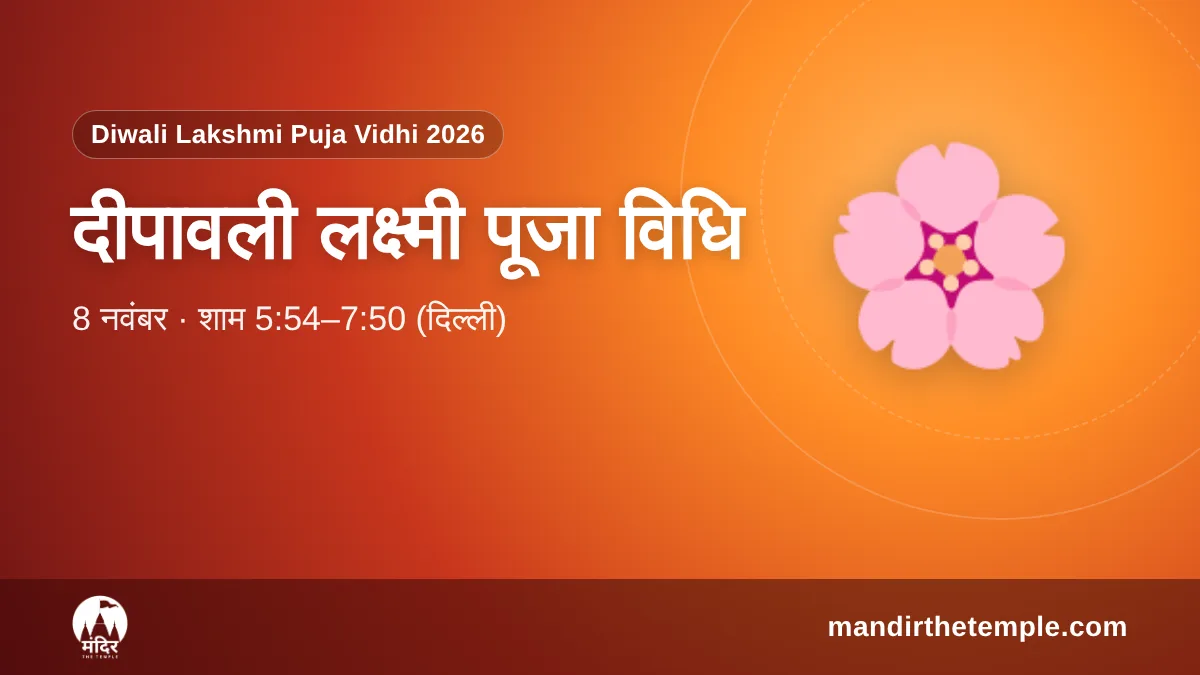
Diwali 2026: date and Lakshmi Puja muhurat
| Detail | Time (Delhi, 2026) |
|---|---|
| Diwali / Lakshmi Puja | Sunday, 8 November 2026 |
| Amavasya tithi begins | 8 November, about 11:27 AM |
| Amavasya tithi ends | 9 November, about 12:31 PM |
| Pradosh Kaal | 5:31 PM to 8:09 PM |
| Vrishabha Kaal (fixed lagna) | 5:54 PM to 7:50 PM |
| Lakshmi Puja muhurat | 5:54 PM to 7:50 PM |
Lakshmi Puja muhurat by city (8 November)
| City | Lakshmi Puja muhurat |
|---|---|
| Delhi | 5:54 PM to 7:50 PM |
| Noida | 5:54 PM to 7:49 PM |
| Gurugram | 5:55 PM to 7:51 PM |
| Chandigarh | 5:52 PM to 7:46 PM |
| Jaipur | 6:03 PM to 7:59 PM |
| Kolkata | 5:20 PM to 7:18 PM |
| Mumbai | 6:27 PM to 8:27 PM |
| Pune | 6:24 PM to 8:24 PM |
| Ahmedabad | 6:22 PM to 8:20 PM |
| Hyderabad | 6:07 PM to 8:08 PM |
| Chennai | 6:07 PM to 8:09 PM |
| Bengaluru | 6:17 PM to 8:20 PM |
Lakshmi Puja is considered most auspicious in Pradosh Kaal during the fixed (sthir) Vrishabha lagna, as worship in a fixed lagna is believed to keep Lakshmi settled in the home. If you cannot worship in this window, you may do the puja any time in Pradosh Kaal. For shopping or new work, also see today’s Choghadiya.
Diwali Lakshmi Puja samagri
- An idol or picture of Lakshmi-Ganesh, and a picture of Kuber (or a silver coin)
- A chowki, red cloth, a kalash filled with water, mango leaves and a coconut
- Roli, kumkum, turmeric, akshat (rice), kalawa, sandalwood, sindoor
- Lotus or rose flowers, a garland, durva grass and betel leaf with betel nut
- Kheel-batashe, sweets, fruit, panchamrit and Gangajal
- A large ghee lamp, clay diyas, mustard oil, cotton wicks, incense and camphor
- Account books, a pen, and silver coins for the safe or cash box
Lakshmi Puja vidhi — step by step
- During the day clean the whole house, hang a toran at the main door and make a rangoli. In the evening bathe and wear clean or new clothes.
- Place a chowki at the puja place, spread a red cloth on it and set up the idol or picture of Lakshmi-Ganesh. Keep a kalash of water beside it with mango leaves and a coconut on top.
- In the muhurat light the large ghee lamp and, holding water, rice and flowers, take the sankalp of the puja for the happiness and prosperity of the family.
- Worship Lord Ganesh first — offer roli, rice, durva, flowers and laddoos and chant “Om Gam Ganapataye Namah”.
- Now worship Goddess Lakshmi — bathe the idol or coins with Gangajal or panchamrit, then offer roli, kumkum, turmeric, rice, a lotus, a garland, kheel-batashe and sweets.
- Chant the Lakshmi mantra 11 or 108 times (given below).
- Worship Kuber, and draw a swastika with roli on the account books, pen, safe or cash box and worship them.
- With the family sing the Ganesh aarti and the Lakshmi aarti and share the prasad.
- Then light lamps throughout the house — at the main door, courtyard, kitchen, tulsi and water place. Keep the large lamp at the puja place burning through the night.
Mantras for Lakshmi Puja
Mahalakshmi mantra
ॐ श्रीं ह्रीं श्रीं कमले कमलालये प्रसीद प्रसीद श्रीं ह्रीं श्रीं ॐ महालक्ष्म्यै नमः॥
Om Shreem Hreem Shreem Kamale Kamalalaye Praseeda Praseeda Shreem Hreem Shreem Om Mahalakshmyai Namah
Simple Lakshmi mantra
ॐ महालक्ष्म्यै नमः॥ (Om Mahalakshmyai Namah) — chant this if you cannot read the longer mantra.
Kuber mantra
ॐ यक्षाय कुबेराय वैश्रवणाय धनधान्याधिपतये धनधान्यसमृद्धिं मे देहि दापय स्वाहा॥
Om Yakshaya Kuberaya Vaishravanaya Dhanadhanyadhipataye Dhanadhanyasamriddhim Me Dehi Dapaya Swaha
Do’s and don’ts on Diwali night
- Do: keep the main door open for a while after the puja — it is believed Lakshmi ji enters the home.
- Do: take the blessings of elders and give sweets and lamps to those in need.
- Do: use firecrackers carefully, in open spaces, with children under adult supervision.
- Don’t: sweep the house right after the puja, and don’t leave the home dark.
- Don’t: quarrel or speak harshly on this day, and don’t lend money.
Why is Diwali celebrated?
- Shri Ram returns to Ayodhya: after fourteen years of exile and victory over Ravana, Lord Ram, Sita and Lakshman returned to Ayodhya, and the people welcomed them with ghee lamps.
- Goddess Lakshmi appears: it is believed that Goddess Lakshmi emerged from the churning of the ocean (Samudra Manthan) on Kartik Amavasya, so she is worshipped on this night.
- Jainism: Lord Mahavira attained nirvana on this day.
- Sikhism: Bandi Chhor Divas is observed, marking Guru Hargobind ji’s return to Amritsar after release from Gwalior Fort.
Preparing for Lakshmi Puja: the day’s schedule
| Time (8 November) | What to do |
|---|---|
| Morning | Abhyang Snan (Narak Chaturdashi), final cleaning, toran and bandanwar at the main door |
| Afternoon | Make the rangoli, prepare the puja chowki and samagri, cook the prasad |
| After 5:00 PM | Bathe, wear new clothes, keep the diyas ready |
| 5:54–7:50 PM (Delhi) | Ganesh-Lakshmi-Kuber puja, aarti, lighting of lamps |
| After the puja | Prasad with the family, blessings of elders, lamps throughout the home |
Where and how to place diyas at home
- One large ghee lamp at the puja place that burns through the night — keep adding ghee.
- Lamps on both sides of the main door, and a rangoli at the door.
- One lamp each in the kitchen, at the water place and near the tulsi.
- One lamp near the safe or the place where money is kept.
- Rows of diyas on the roof, balcony and windows.
- Soak clay diyas in water for a few hours beforehand so they absorb less oil.
What to buy on Diwali
On Dhanteras and Diwali, buying a new broom, utensils, silver coins, a new Lakshmi-Ganesh idol, clay diyas and kheel-batashe is considered auspicious. Avoid Rahu Kaal for shopping and check an auspicious Choghadiya.
What to do after Lakshmi Puja
- Tie the silver coins and cowries from the puja in a red cloth and keep them in the safe or where money is kept.
- Share the kheel-batashe and sweets as prasad with family, neighbours and those who work in your home.
- Next morning clean the puja place respectfully; the idol can stay at the shrine until next year.
- Put leftover flowers and lamp ash in flowing water or at the root of a tree, not in the rubbish.
Nishita Kaal puja
Many families and practitioners also do a special worship of Maa Lakshmi and Maa Kali at midnight on Amavasya, in the Nishita Kaal. In Bengal, Assam and Odisha, Kali Puja is celebrated on this night. For householders, the Pradosh Kaal puja is the main one.
The five days of Diwali (2026)
| Date | Festival |
|---|---|
| Friday, 6 November | Dhanteras |
| 7 November (evening), 8 November (morning) | Choti Diwali · Narak Chaturdashi |
| Sunday, 8 November | Diwali · Lakshmi Puja |
| Tuesday, 10 November | Govardhan Puja · Annakut |
| Wednesday, 11 November | Bhai Dooj |
Amavasya continues until the afternoon of 9 November, so Govardhan Puja falls on 10 November. Read more on Wikipedia, and see our Vrat Calendar.
Also read: Shri Lakshmi Chalisa
Frequently asked questions
When is Diwali in 2026?
Diwali and Lakshmi Puja are on Sunday, 8 November 2026. Amavasya tithi runs from about 11:27 AM on 8 November to about 12:31 PM on 9 November.
What is the best Lakshmi Puja muhurat in 2026?
In Delhi, 5:54 PM to 7:50 PM, when Pradosh Kaal and the fixed Vrishabha lagna overlap. See the table above for other cities.
Who is worshipped first in Lakshmi Puja?
Lord Ganesh is worshipped first, then Goddess Lakshmi, followed by Kuber and the account books and safe.
How many diyas should be lit on Diwali?
There is no fixed number. Keep one large lamp burning at the puja place through the night and light lamps at the main door, courtyard, kitchen, tulsi and water place. Many families light 11, 21 or 51 lamps.