Jaya Ekadashi is the Ekadashi of the Shukla Paksha (bright fortnight) of the Hindu month of Magha, and it is counted among the most meritorious fasts dedicated to Lord Vishnu. “Jaya” means victory. By tradition, this fast is said to bring victory over sin, over bad habits and over the restlessness of one’s own mind.
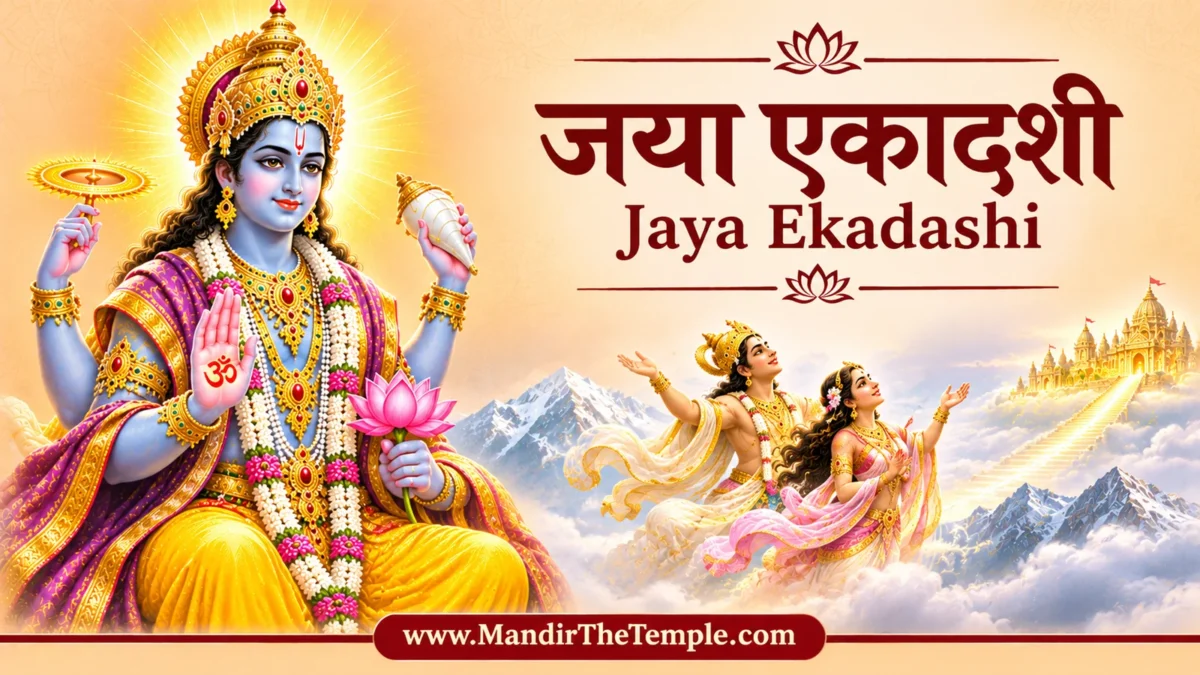
Jaya Ekadashi is best known for the story of the gandharva singer Malyavan and the apsara Pushpavati. Cursed by Indra to live as pishachas (restless spirits), they were freed when they unknowingly kept this very Ekadashi. That is why the fast is popularly remembered as the Ekadashi that releases souls from pishacha yoni.
The day comes three days after Bhishma Ashtami, and the next day is Bhishma Dwadashi. In South India it is called Bhishma Ekadashi, and in Vaishnava calendars Bhaimi Ekadashi. Below you will find the date and parana time, the full vrat katha, a step-by-step puja vidhi, mantras, food rules, the Bhishma Dwadashi connection and common myths explained simply.
Jaya Ekadashi Date 2027: Tithi and Parana Time
Quick answer: Jaya Ekadashi 2026 (29 January) has already passed. The next Jaya Ekadashi fast is on Wednesday, 17 February 2027. As per the New Delhi panchang, Ekadashi tithi begins at 8:19 PM on 16 February and ends at 5:31 PM on 17 February, and parana can be done on 18 February between 6:57 AM and 9:12 AM.
Next Jaya Ekadashi
Jaya Ekadashi 2027
17 February 2027, Wednesday 108 days to go
- Month and paksha
- Magha Shukla
- Ekadashi tithi
- 16 Feb 20:21 – 17 Feb 17:33
- Parana (breaking the fast)
- 18 Feb, 06:57 – 09:12
| Year | Fasting date | Ekadashi tithi | Parana |
|---|---|---|---|
| 2026 | 29 January 2026, Thursday | 28 Jan 16:37 – 29 Jan 13:57 | 30 Jan, 07:10 – 09:20 |
| 2027 | 17 February 2027, Wednesday | 16 Feb 20:21 – 17 Feb 17:33 | 18 Feb, 06:57 – 09:12 |
| 2028 | 7 February 2028, Monday | 6 Feb 11:19 – 7 Feb 09:26 | 8 Feb, 07:05 – 09:17 |
| 2029 | 26 January 2029, Friday | 25 Jan 16:51 – 26 Jan 17:14 | 27 Jan, 07:11 – 09:20 |
Dates follow the Smarta tradition by sunrise in the selected city (Delhi) and move forward automatically every year. Choose your city above for local timings. Times are approximate; check your local panchang.
The table above automatically shows this year’s and the coming years’ dates and parana times for your city. Sunrise differs from city to city, so always check the parana window for your own location.
Smarta and Vaishnava: When the Ekadashi tithi spans two days, householders (Smarta) fast on the first day and Vaishnava followers (such as ISKCON) on the second. In India both traditions fast on the same day this time, but in places like North America the dates can differ by a day, so please check the table for your city.
Meaning of Jaya Ekadashi and Its Other Names
“Jaya” comes from “jay”, meaning victory, so Jaya Ekadashi means “the Ekadashi that grants victory”. The victory meant here is less about battles and more about the inner enemies: desire, anger, greed and laziness. In the katha, Malyavan and Pushpavati fell because of a lapse of self-control, and the merit of the fast helped them overcome that fall.
Other names of Jaya Ekadashi
- Magha Shukla Ekadashi — the general name based on the lunar date.
- Bhishma Ekadashi — the popular name in Andhra Pradesh, Telangana and other parts of South India, linked with Bhishma Pitamah and the Vishnu Sahasranama.
- Bhaimi Ekadashi / Bhima Ekadashi — the name used in Gaudiya Vaishnava calendars, including ISKCON. In Nepal and Odisha it is also called Bhima or Bhaumi Ekadashi, and folk tradition links it with Bhima, the Pandava.
Note that Nirjala Ekadashi of Jyeshtha Shukla is also called “Bhimseni Ekadashi”. They are two different Ekadashis, so do not get confused by the similar names.
The month in Purnimanta and Amanta calendars
In both the Purnimanta calendar used in North India and the Amanta calendar used in Maharashtra, Gujarat, Karnataka, Andhra and other regions, Jaya Ekadashi falls in Magha Shukla Paksha. The Shukla Paksha month is the same in both systems; only the Krishna Paksha month names differ. In the Gregorian calendar it usually falls between late January and February.
Significance of Jaya Ekadashi
Religious significance
Magha is itself a holy month. The Magh Mela is held at Prayagraj, devotees observe Kalpavas, and bathing in the Ganga is considered especially sacred. Being the Shukla Ekadashi of this month adds to the importance of Jaya Ekadashi. By tradition, worship of Vishnu, fasting, japa and charity on this day help wash away sins.
In the katha, Lord Krishna says that whoever keeps this fast with faith does not have to wander in lower births. That is why many families also keep it with a prayer for the peace of departed relatives.
Spiritual message
The central message of the story is self-control while doing one’s duty. Malyavan and Pushpavati were gifted artists, but their attention wandered during their service. The story reminds us that art, knowledge or any service shines only when it is offered with discipline and respect.
The second message is divine compassion. The two knew no ritual and took no vow, yet their sincere remorse, giving up food and staying awake all night were accepted. Even a small effort made with a true heart is never wasted.
Mention in the Puranas
By tradition, the glory of Jaya Ekadashi is described in the Padma Purana and the Bhavishyottara Purana, where Lord Krishna narrates the Ekadashis of the year to Yudhishthira. The Bhishma Ekadashi link comes from the Anushasana Parva of the Mahabharata, where Bhishma, lying on his bed of arrows, teaches the Vishnu Sahasranama to Yudhishthira.
Jaya Ekadashi Vrat Katha
Dharmaraja Yudhishthira said to Lord Krishna, “O Janardana, you have told me the glory of Shattila Ekadashi of Magha Krishna Paksha. Now please tell me the name of the Ekadashi of Magha Shukla Paksha, its method, and which deity is worshipped on it.”
Krishna replied, “O King, the Ekadashi of Magha Shukla Paksha is called Jaya. It destroys all sins and is said to free a person even from ghostly births. On this day Lord Vishnu should be worshipped with devotion. Listen now to an ancient story about it.”
Indra’s court in Nandana forest
Once, Indra, king of the devas, was enjoying himself in the beautiful Nandana forest of heaven. Parijata flowers were in bloom, apsaras were dancing and gandharvas were singing. Among those present were the gandharva Pushpadanta and his daughter Pushpavati, and the gandharva Chitrasena and his family. Chitrasena’s grandson (his son, in some versions), Malyavan, was a gifted singer.
Malyavan was singing for Indra while Pushpavati danced. Pushpavati became captivated by Malyavan and tried to charm him with her gestures, and Malyavan too was lost in her beauty. With their minds elsewhere, his notes went off-key and the rhythm broke, and her dance lost its beat.
Indra’s curse: life as pishachas
Indra saw at once that their minds were on each other, not on their service. Angered by this disrespect to sacred music in the assembly of the gods, he said, “You have disobeyed my command and dishonoured this music. Go to the mortal world as husband and wife, live as pishachas and bear the fruit of your actions.”
The moment the curse was spoken, they lost their divine forms and fell to earth in a remote part of the Himalayas, where they began to wander as pishachas.
Suffering in the Himalayan cold
In the bitter Himalayan cold their life became a torment. They found no rest and no sleep, and even the pleasures of smell, taste and touch were taken from them. Their teeth chattered and their bodies shivered in the icy winds.
One day Malyavan said sadly to Pushpavati, “Who knows what sins we committed in past lives to fall into this terrible state. Let us resolve never to commit any sin again.” True remorse awoke in both their hearts.
The fast kept unknowingly
By chance, the day of Jaya Ekadashi of Magha Shukla Paksha soon arrived. In their grief they did not eat a single grain that day. Some versions say they lived on wild fruits and flowers, while others say they took nothing at all, not even water. They also did no harm to any living being.
At sunset they sat beneath a peepal tree. As night fell the cold grew so fierce that sleep was impossible. All night they huddled together, shivering, awake and full of regret. They did not even know it was Jaya Ekadashi, yet in this way their fast and night vigil were completed without their knowing.
Freedom and return to heaven
At dawn on Dwadashi, by the grace of Lord Vishnu, they were freed from their pishacha bodies and regained their radiant gandharva and apsara forms. Adorned in divine clothes and ornaments, they were carried to heaven in a celestial vimana as the devas showered flowers.
They bowed before Indra, who asked in astonishment how they had been freed. Malyavan humbly answered, “O king of the devas, it is the grace of Lord Vishnu and the power of the Jaya Ekadashi fast.” Indra said, “Those who are devoted to Vishnu and keep the Ekadashi fast are worthy of reverence even for us. You are blessed. Live here happily.”
Concluding the story, Krishna told Yudhishthira that whoever keeps Jaya Ekadashi need not fear births like that of a pishacha, and that by tradition the fast brings the merit of many yajnas, austerities and acts of charity.
Lesson of the story: a wandering mind can make anyone fall, but sincere remorse and surrender to God can raise them again. It is customary to sing the Ekadashi Mata Ki Aarti after reading the katha.
The Belief of Freedom from Pishacha Yoni
The most common question about Jaya Ekadashi is whether it frees one from pishacha yoni. It is best understood from the point of view of tradition and faith.
- What the tradition says: according to the Puranic story, the merit of Jaya Ekadashi freed Malyavan and Pushpavati. On this basis it is believed the fast protects a soul from restless states after death.
- Prayer for departed relatives: many families keep the fast with a sankalp that its merit may bring peace to departed loved ones. It is a prayer of faith, not a tantric remedy.
- Symbolic meaning: many saints see “pishacha yoni” as a state of mind trapped in craving, fear and restlessness. The discipline of Ekadashi and remembrance of God are seen as a way out of it.
- Faith, not fear: this fast is not something to keep out of fear. There is no need to pay for expensive rituals to “drive away ghosts”. A simple fast, Vishnu puja, japa and charity are the tradition of the day.
Bhishma Ekadashi and Bhishma Dwadashi
These days of Magha Shukla Paksha are tied to the memory of Bhishma Pitamah. After the Kurukshetra war, Bhishma lay on a bed of arrows waiting for Uttarayana, as he had the boon of choosing the time of his death. By tradition he left his body on Magha Shukla Ashtami, observed as Bhishma Ashtami.
Bhishma Ekadashi and the Vishnu Sahasranama
In South India, especially Andhra Pradesh and Telangana, Jaya Ekadashi is called Bhishma Ekadashi. It is believed that Bhishma, in the presence of Krishna, taught Yudhishthira the Vishnu Sahasranama, the thousand names of Vishnu. Some therefore observe the day as “Vishnu Sahasranama Jayanti”, and temples hold group recitations.
Bhishma Dwadashi (Til Dwadashi)
The day after Jaya Ekadashi, Magha Shukla Dwadashi, is Bhishma Dwadashi, also called Til Dwadashi in many places. It is believed that although Bhishma left his body on Ashtami, the rites in his honour were performed on Dwadashi. On this day:
- Devotees bathe and worship Lord Vishnu and Lord Krishna.
- Tarpan is offered to Bhishma with sesame, water and kusha grass. Since Bhishma was a lifelong celibate with no children, tradition holds that any devotee may offer him tarpan.
- Many families also offer tarpan to their own ancestors.
- Donating sesame, offering sesame in havan and feeding the needy are customary.
Since the parana of Jaya Ekadashi also falls on this Dwadashi morning, many devotees combine parana with til daan and Bhishma tarpan, honouring all three observances together.
Varaha Dwadashi (Vaishnava tradition)
In the Gaudiya Vaishnava tradition, the day after Bhaimi Ekadashi is celebrated as Varaha Dwadashi, the appearance day of Lord Varaha. If this is your family custom, you may also remember Lord Varaha on Dwadashi.
Jaya Ekadashi Puja Vidhi (Step by Step)
The method below is for ordinary households. If your family or sampradaya has its own custom, follow that. Faith and sincerity matter most, so do not worry if some items are missing.
Dashami (the day before)
- Eat one light sattvik meal before sunset. Avoid rice, masoor dal, onion, garlic and non-vegetarian food.
- Observe celibacy that night and keep the next day’s fast in mind.
- Clean the puja area. Pluck tulsi leaves a day in advance, as tulsi is not plucked on Ekadashi.
Ekadashi morning and sankalp
- Wake before sunrise. Bathing in a holy river is special in Magha; otherwise add a little Ganga jal and sesame to your bath water.
- Wear clean (preferably yellow) clothes and offer water to the Sun.
- Take water, akshat and a flower in your hand and make a sankalp: “Today I keep the Jaya Ekadashi fast for the pleasure of Lord Vishnu and for the removal of my sins.” Say your name and gotra.
- Decide the type of fast (nirjala, phalahar or one meal) according to your health.
Worship of Lord Vishnu
- Spread a yellow cloth on a chowki and place an image of Vishnu, Krishna or Laddu Gopal.
- Remember Lord Ganesha first, and set up a kalash if it is your custom.
- Bathe the deity with Ganga jal, then with panchamrit (milk, curd, ghee, honey, sugar).
- Offer yellow clothes, sandal paste, yellow flowers, akshat and tulsi.
- Light incense and a lamp and offer fruits, til-gud laddoos or panchamrit, always with a tulsi leaf.
- Chant “Om Namo Bhagavate Vasudevaya” at least one mala (108 times).
- Read or listen to the Jaya Ekadashi vrat katha with your family.
- If you follow the Bhishma Ekadashi custom, recite the Vishnu Sahasranama.
- Finish with the Om Jai Jagdish Hare Aarti and ask forgiveness for any mistakes.
Evening puja and night jagran
- Light a lamp again in the evening, near the tulsi plant and, if possible, near a peepal tree, recalling the night of the katha.
- Recite the Vishnu Sahasranama, sing bhajans or chant the holy name.
- The night vigil has a special place in this katha, so stay awake for some time if you can. If your health does not allow it, a full night is not necessary.
Dwadashi and parana
- Bathe on Dwadashi morning, worship Vishnu and offer bhog.
- Donate food, sesame, grain or warm clothes to a Brahmin or someone in need.
- If it is your custom, offer sesame-water tarpan to Bhishma and your ancestors.
- Break the fast within the parana window shown in the table above, first with tulsi and water, then a sattvik meal.
Puja Samagri List
- Image or idol of Lord Vishnu or Krishna
- Chowki and yellow cloth
- Ganga jal and a kalash of clean water
- Panchamrit (milk, curd, ghee, honey, sugar)
- Yellow sandal paste, roli, akshat (whole rice, only for offering)
- Yellow flowers and a garland
- Tulsi leaves (plucked a day earlier)
- Incense, ghee lamp, cotton wicks, camphor
- Black or white sesame (til is special in Magha)
- Fruits, til-gud laddoos, dry fruits and sweets for bhog
- Betel leaf, supari, cloves, cardamom
- Vrat katha book and Vishnu Sahasranama
- Kusha, sesame and water for tarpan (for Bhishma Dwadashi, if your custom)
- Grain, sesame, blankets or warm clothes for donation
Jaya Ekadashi Mantras
Feeling matters more than perfect pronunciation. Choose any one mantra and chant it 108 times with a focused mind.
1. Dwadashakshar mantra
ॐ नमो भगवते वासुदेवाय॥ (Om Namo Bhagavate Vasudevaya)
Meaning: I bow to Lord Vasudeva (Krishna/Vishnu). This is the most widely chanted mantra on Ekadashi.
2. Ashtakshar mantra
ॐ नमो नारायणाय॥ (Om Namo Narayanaya)
Meaning: Salutations to the all-pervading Lord Narayana. Short and simple, it suits children and elders too.
3. Vishnu dhyana mantra
शान्ताकारं भुजगशयनं पद्मनाभं सुरेशं विश्वाधारं गगनसदृशं मेघवर्णं शुभाङ्गम्। लक्ष्मीकान्तं कमलनयनं योगिभिर्ध्यानगम्यं वन्दे विष्णुं भवभयहरं सर्वलोकैकनाथम्॥
Meaning: I bow to Lord Vishnu, the peaceful one who rests on the serpent, from whose navel a lotus grows, lord of the gods and support of the universe, vast as the sky, dark as a rain cloud, beloved of Lakshmi, lotus-eyed, reached by yogis in meditation, remover of the fear of worldly existence and the one Lord of all worlds.
4. The “Rama Nama” verse of the Vishnu Sahasranama
श्रीराम राम रामेति रमे रामे मनोरमे। सहस्रनाम तत्तुल्यं रामनाम वरानने॥
Meaning: At the close of the Vishnu Sahasranama, Lord Shiva tells Parvati that saying “Rama” three times equals the thousand names. On Bhishma Ekadashi, those who cannot read the full Sahasranama traditionally recite this verse.
What to Eat and Not Eat on Jaya Ekadashi
The core rule of Ekadashi is giving up grains. Beyond that, what you eat depends on your tradition, your health and the type of fast.
What you can eat
- Fresh fruits such as banana, apple, papaya, pomegranate, guava and orange
- Milk, curd, buttermilk, paneer and khoya
- Sabudana, singhara flour, kuttu flour, rajgira and samak rice
- Potato, sweet potato, arbi, pumpkin and bottle gourd
- Peanuts, makhana, almonds, raisins, walnuts and coconut
- Rock salt (sendha namak), black pepper, cumin and green chilli
- Jaggery and sesame sweets, popular in Magha (some Vaishnava traditions avoid sesame on Ekadashi, so follow your custom)
What to avoid
- Rice and anything made from rice
- Wheat, barley, maize, bajra, jowar and other grains
- Pulses, chana, rajma and soybean
- Onion, garlic, meat, fish, eggs and alcohol
- Regular iodised salt (use rock salt instead)
- Brinjal and cauliflower are avoided in some traditions
- Tamasic, stale and heavily fried food
Nirjala fast
In a nirjala fast both food and water are given up for the whole day. It is the hardest form. In the katha, Malyavan and Pushpavati kept such a strict fast unknowingly, but it is not compulsory. Only fully healthy people should attempt it, and if you feel weak or dizzy, take water or fruit.
Phalahar fast
Most householders keep a phalahar fast: no grains, but fruits, milk and dishes of sabudana, kuttu or singhara once or twice a day. In the Magha cold, warm milk, dry fruits and sweet potato help keep up energy.
One meal (Ekabhukta)
Those who cannot go without food all day take one phalahari meal.
Health caution: people with diabetes, blood pressure, heart or kidney problems, pregnant or breastfeeding women, the elderly and anyone on regular medication should consult their doctor before any strict fast. Do not stop medicines. Tradition itself exempts the sick, children and the elderly from strict rules.
Jaya Ekadashi Parana: When and How to Break the Fast
An Ekadashi fast is complete only when parana, breaking the fast on Dwadashi, is done at the right time.
- Within Dwadashi: parana is done after sunrise the next day and before Dwadashi tithi ends.
- Not during Harivasara: the first quarter of Dwadashi tithi is called Harivasara, and parana is not done during it. Wait for it to end if it extends into the morning.
- Best time: early morning is ideal. If that is not possible, parana can be done after midday, but still within Dwadashi.
- Smarta and Vaishnava: when the two traditions fast on different days, their parana days also differ. Check the right row in the table.
How to do parana
- Bathe, worship Vishnu and offer bhog.
- Give food or charity to someone in need. As it is Bhishma Dwadashi, til daan is considered especially auspicious.
- First take a tulsi leaf with a little water, then the prasad.
- Then eat a light sattvik meal. Eating rice at parana is traditionally considered auspicious, but avoid heavy or tamasic food.
The exact parana window for your city is in the table above. For daily tithis, see our Daily Panchang.
Do’s and Don’ts on Jaya Ekadashi
Do’s
- Wake early and bathe; bathing with sesame in the water is auspicious in Magha.
- Worship Lord Vishnu and chant “Om Namo Bhagavate Vasudevaya”.
- Read or listen to the Jaya Ekadashi vrat katha.
- Recite the Vishnu Sahasranama, especially if you observe Bhishma Ekadashi.
- Light lamps near the tulsi and peepal in the evening.
- Donate blankets, warm clothes, sesame, jaggery or grain to the needy in this cold season.
Don’ts
- Do not eat rice or grains; avoid onion, garlic and tamasic food.
- Do not pluck tulsi leaves on Ekadashi.
- Avoid anger, lies, gossip, harsh words and quarrels.
- Avoid sleeping during the day.
- Do not disrespect anyone, especially teachers and elders; in the katha, disrespect in Indra’s court led to the curse.
- Stay away from alcohol, gambling and any violence.
- Do not force a strict fast at the cost of your health.
Jaya Ekadashi Myths vs Reality
Myth: Jaya Ekadashi is a tantric remedy to drive away ghosts.
Reality: The katha speaks of release from pishacha yoni, but Jaya Ekadashi is a sattvik Vishnu fast, not a tantric ritual. Its tradition is fasting, puja, japa, charity and self-control. There is no need to pay for costly rituals out of fear.
Myth: This fast surely wipes out all sins, so behaviour does not matter.
Reality: The Puranas describe the fruits of a vrat to inspire faith. In the katha, Malyavan himself resolved never to sin again. Sincere remorse and better conduct are the heart of the fast; it is not a licence.
Myth: A fast without the exact ritual is useless.
Reality: The Jaya Ekadashi story itself answers this. Malyavan and Pushpavati knew neither the ritual nor the date, yet by tradition their fast and vigil were accepted. Following the method is good, but faith and sincerity matter most.
Myth: Drinking water breaks the Ekadashi fast.
Reality: Only the nirjala fast excludes water. In phalahar and one-meal fasts, water, milk and fruits are taken. The core rule is giving up grains, not water.
Myth: Bhishma Ekadashi and Jaya Ekadashi are on different days.
Reality: They are regional names for the same Magha Shukla Ekadashi: Jaya in the North, Bhishma Ekadashi in the South and Bhaimi Ekadashi in Vaishnava calendars. Bhishma Dwadashi, the next day, is a separate observance.
Myth: Fasting “detoxes” the body, so everyone should fast without water.
Reality: A vrat is a spiritual practice, not a medical treatment or a guaranteed health fix. With diabetes, pregnancy, old age or medication, a strict fast can be harmful, so such people should fast only on medical advice.
Benefits of Jaya Ekadashi (Religious Beliefs)
The benefits below are beliefs from the Puranas and tradition. See them as matters of faith, not guarantees.
- Removal of sins: tradition holds that the fast lessens the effect of sins committed knowingly or unknowingly.
- Protection from lower births: based on the katha, it is believed to protect from births such as that of a pishacha.
- Peace for departed relatives: many dedicate the merit of the fast to their ancestors, praying for their peace.
- Merit like yajna, tapas and charity: the katha says the fast is equal in merit to many yajnas and gifts.
- Victory over the mind: true to its name, the fast is seen as strengthening self-control, focus and discipline.
- Blessings for art and learning: because of the gandharva-apsara story, many artists pray for purity and success in their art on this day.
Related Ekadashis and Readings
Just before Jaya comes Shattila Ekadashi of Magha Krishna Paksha, known for the six uses of sesame. After Jaya comes Vijaya Ekadashi of Phalguna Krishna Paksha, linked with Lord Rama’s victory over Lanka. For all Ekadashi dates of the year, visit our Ekadashi Kab Hai page.
For the day’s worship, also read Om Jai Jagdish Hare Aarti, Ekadashi Mata Ki Aarti and Tulsi Mata Ki Aarti. You can also download all aartis together in our Aarti Sangrah PDF.
Jaya Ekadashi reminds us that anyone can slip, even a singer in heaven, but sincere remorse, self-control and surrender to God open the way back. Keep this Magha Shukla Ekadashi with faith, remember Lord Vishnu, help those in need and, the next day, remember Bhishma Pitamah with gratitude. May Sri Hari bless you and your family. Om Namo Bhagavate Vasudevaya.
Frequently asked questions
When is Jaya Ekadashi in 2027?
Jaya Ekadashi 2027 is on Wednesday, 17 February 2027, with parana on the morning of 18 February (New Delhi). See the date table on this page for your city’s parana time and future years.
In which month does Jaya Ekadashi fall?
It is the Ekadashi of Magha Shukla Paksha in both the Purnimanta and Amanta calendars. In the Gregorian calendar it usually falls between late January and February.
Why is it called Jaya Ekadashi?
‘Jaya’ means victory. By tradition, the fast grants victory over sins and the weaknesses of the mind.
What are the other names of Jaya Ekadashi?
It is called Bhishma Ekadashi in South India, Bhaimi Ekadashi in Gaudiya Vaishnava (ISKCON) calendars, and Bhima or Bhaumi Ekadashi in Nepal and Odisha.
What is the Jaya Ekadashi vrat katha?
The gandharva Malyavan and the apsara Pushpavati lost focus while performing in Indra’s court and were cursed to become pishachas. In the Himalayan cold they unknowingly fasted and stayed awake on Jaya Ekadashi, and by Vishnu’s grace they were freed and returned to heaven.
Does Jaya Ekadashi free one from pishacha yoni?
Based on the katha, tradition believes the fast protects from births such as that of a pishacha. It is a matter of faith and prayer, not a tantric remedy.
Are Bhishma Ekadashi and Jaya Ekadashi the same?
Yes, they are regional names for the same Magha Shukla Ekadashi. In South India the day especially recalls Bhishma teaching the Vishnu Sahasranama.
What is Bhishma Dwadashi and how is it linked to Jaya Ekadashi?
Bhishma Dwadashi is the day after Jaya Ekadashi (Magha Shukla Dwadashi). Parana also falls that morning, so many devotees combine it with til daan and tarpan for Bhishma.
Which deity is worshipped on Jaya Ekadashi?
Lord Vishnu, in his Krishna or Narayana form. Those who follow the Bhishma Ekadashi custom also recite the Vishnu Sahasranama.
What can we eat during the Jaya Ekadashi fast?
Fruits, milk, curd, sabudana, kuttu, singhara, potato, sweet potato, makhana, nuts and rock salt are allowed. Rice, wheat, pulses, onion, garlic and non-vegetarian food are avoided.
Can we drink water on Jaya Ekadashi?
Yes, except in a nirjala fast. In phalahar and one-meal fasts water is allowed; the core rule is giving up grains.
Can we eat rice on Ekadashi?
No, rice and all grains are avoided on Ekadashi. Rice can be eaten at parana on Dwadashi.
When should Jaya Ekadashi parana be done?
On Dwadashi after sunrise, after Harivasara ends and before Dwadashi tithi ends. Check the exact time for your city in the table on this page.
What is the difference between Smarta and Vaishnava Ekadashi?
When the tithi spans two days, Smarta householders fast on the first day and Vaishnavas (such as ISKCON) on the second. In India Jaya Ekadashi usually falls on the same day for both.
Which mantra should be chanted on Jaya Ekadashi?
The most common is ‘Om Namo Bhagavate Vasudevaya’. ‘Om Namo Narayanaya’ and the Vishnu Sahasranama are also recited.
Can pregnant women, the elderly or diabetics keep this fast?
They can keep a light phalahar or one-meal fast on their doctor’s advice. Avoid strict fasts like nirjala and do not stop medicines.
What if the Jaya Ekadashi fast breaks by mistake?
Do not worry; ask Lord Vishnu’s forgiveness and continue the fast and chanting as best you can. Tradition values sincere devotion above all.
What should be donated on Jaya Ekadashi?
Blankets, warm clothes, sesame, jaggery and grain are popular gifts in the Magha cold. Til daan on Dwadashi is considered especially meritorious.